
13 new research grants awarded
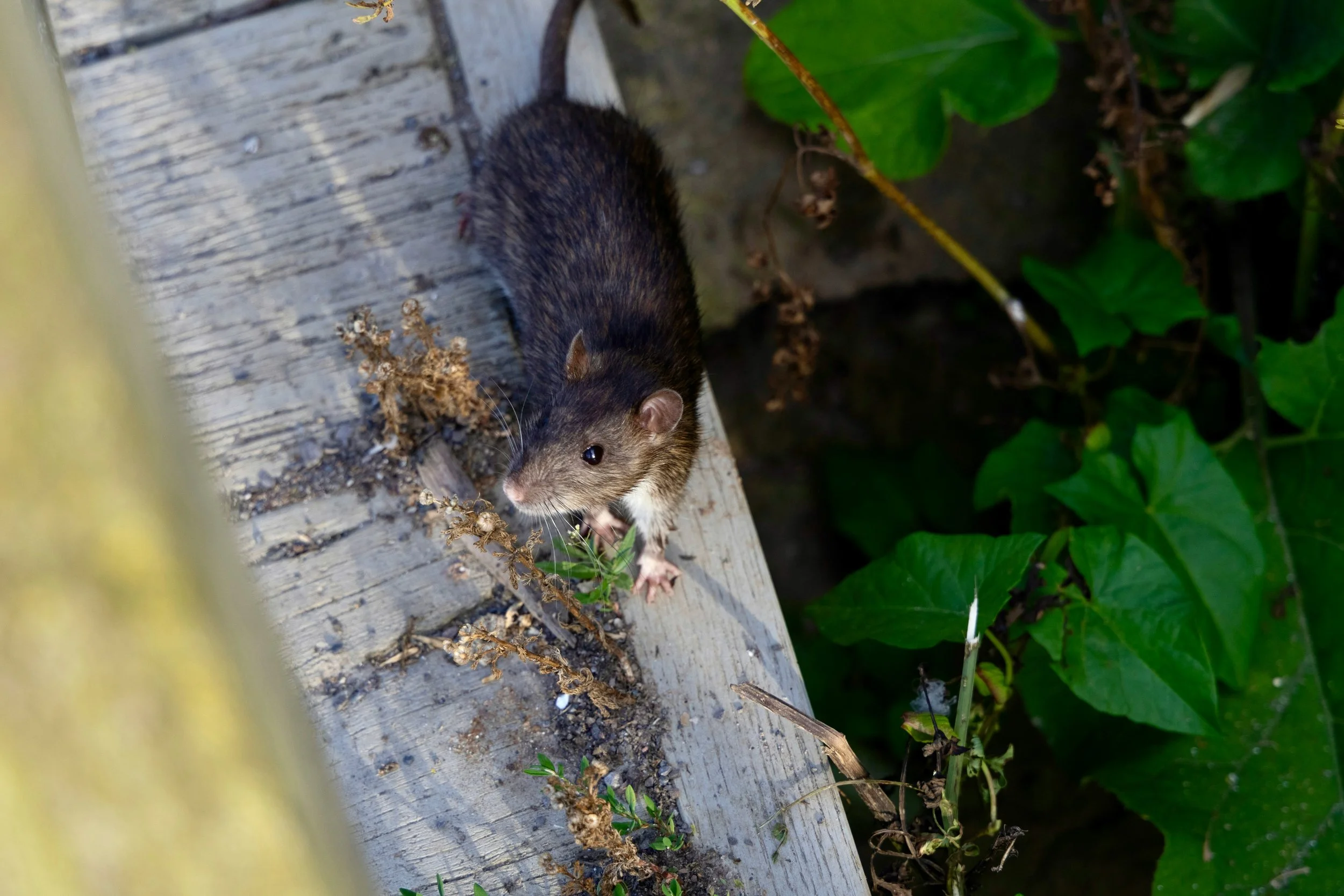
Emily Mackevicius and her research team will investigate how urban micro-habitat conditions affect the subjective experiences of brown rats (Rattus norvegicus).
June 23, 2026
Wild Animal Initiative has selected 13 new research projects to receive a total of $727,658 in grants, adding to the body of ongoing and completed scientific research we have funded.
Our Grants Program funds academic research on high-priority questions in wild animal welfare science. This year, after receiving 400 expressions of interest, we selected grantees based on how well their projects meet our selection criteria and address priority topics in the field of wild animal welfare science.
We offered four types of grants this year: flagship Fellowships for researchers looking to develop long-term careers in wild animal welfare science; large Challenge Grants for complex projects that address key research questions; mid-size Discovery Grants for projects that expand the evidence base of wild animal welfare by validating methods and applying them to new systems; and small Seed Grants for researchers to develop new ideas or build welfare questions into existing projects.
Read on to learn about the projects we selected this year.
Fellowship
Acoustic indicators of welfare in neotropical frogs: Calls as early-warning signals of sublethal suffering related to infection and environmental stress
Erin Wall, Wavelength Animal Communication Science and the University of Texas at Austin (United States)
$180,000
Climate change, habitat loss, and infectious disease are creating compounding challenges for frogs, yet we have limited tools to monitor the behavioral and physiological consequences of those challenges, assess frog welfare, or detect sublethal suffering. Emerging evidence indicates that frog call characteristics are modulated by environmental and physiological conditions, offering the potential for rapid insights into an individual’s welfare. This project will examine the relationship between environmental conditions, physiology, and behavior to connect indices of welfare to variation in acoustic signals in neotropical frogs in Panama. By linking these measures to natural levels of sublethal infection and variation in environmental conditions, the researchers will aim to identify acoustic signatures of welfare and develop a rapid, non-intrusive welfare detection tool for thousands of species of vocalizing frogs.
Why we funded this project
Along with supporting an early-career researcher with an interest in building a career in wild animal welfare science, this grant will deliver a behavioral assessment framework and acoustic classifier tool for anurans to deepen our understanding of welfare in this diverse taxon and address the need for evidence-based, scalable welfare assessment methods.
Challenge Grants
Environmental drivers of welfare in urban rats: A multimodal field study of micro-habitat conditions and affective behavior
Emily Mackevicius, Basis Research Institute (United States)
$100,000
This project will investigate how urban micro-habitat conditions shape the affective and social lives of free-ranging brown rats (Rattus norvegicus). Rats are highly social, intelligent, and abundant animals, and better tools for understanding their behavior could support both wild animal welfare science and integrative management practices. The project will first test whether indicators developed in laboratory rodents such as ultrasonic vocalizations, posture, movement, social behavior, and surface temperature can be used to infer affective state and social experience in urban field settings. The team will then model how environmental features predict these indicators, with the goal of identifying urban conditions associated with positive or negative experiences.
Why we funded this project
This project addresses a neglected but important question: how fine-scale features of human-built environments shape the subjective experiences of abundant urban animals. The resulting methods could support future welfare studies across sites, cities, and taxa, and provide tools for welfare-aware, evidence-based urban management.
Towards welfare-centered prescribed fire
Dale Nimmo, Charles Sturt University (Australia)
$98,700
This project will investigate how prescribed burning affects the welfare of wild animals, and whether an animal’s welfare state before exposure to fire helps determine survival and harm suffered. The research team will study bush rats (Rattus fuscipes) in forest blocks scheduled for prescribed burns and in control sites, sampling individuals before fire, shortly after fire, and during early recovery, and combining behavioral, body-condition, injury, and non-invasive physiological measures to infer changes in affective state and welfare. Lightweight telemetry will enable tracking of survival and severe harm through the burn window and post-fire period, while fire-severity mapping, refuge measurements, and camera traps will help identify the mechanisms involved. The goal is to generate practical evidence for welfare-centered prescribed fire: burns planned and implemented in ways that retain refuges, maintain escape options, and reduce avoidable suffering.
Why we funded this project
By combining welfare indicators with telemetry, fire-exposure metrics, refuge measurements, and predator activity, the project helps move wild animal welfare beyond descriptive assessment toward identifying the mechanisms and management choices that could reduce suffering.
Developing, testing, and validating indicators of wild insect welfare
Carl Soulsbury, University of Lincoln (United Kingdom)
$92,148
This project aims to develop and validate practical indicators of welfare in wild insects. Working with three common model species — Dubia cockroaches (Blaptica dubia), two-spotted crickets (Gryllus bimaculatus), and carrion beetles — it will measure a suite of behavioral and physiological stress responses including oxidative stress markers, fat reserves via NMR, and movement patterns tracked using AI-assisted video analysis. These measures will be validated against cognitive bias testing to identify which indicators reliably reflect negative welfare. The most field-accessible measures will be applied to wild carrion beetle populations, testing whether lab-derived welfare indicators hold up under natural conditions. The goal is to produce a generalizable welfare assessment toolkit that researchers can use across insect taxa in both captive and wild settings.
Why we funded this project
Invertebrates make up the vast majority of animal life on Earth, yet almost nothing is known about their welfare in the wild — so the knowledge generated by this project has the potential to facilitate large-scale impact. This project provides the first systematic, cross-taxa proof of concept for measuring welfare in wild insects, moving beyond the captive-only focus that has dominated invertebrate welfare research to date. Funding this project also deepens our work with an existing grantee.

Mark Briffa’s project will explore whether urban coastal environments alter fear-related behavioral and physiological responses in wild hermit crabs.
Discovery Grants
Validating acoustic monitoring as a non-invasive welfare indicator in urban coyotes: Linking vocalizations to health status, social dynamics, and environmental quality
Caroline Rowley, Duke University (United States)
$49,978
Coyote populations have expanded dramatically across North America, but population-level success does not necessarily equate to good welfare. Urban coyotes in particular face welfare challenges including disease, parasites, habitat degradation, reliance on anthropogenic food sources, and stress from human-wildlife conflict. This project is a pilot study aimed at validating passive acoustic monitoring as a welfare assessment tool. Data will be collected via GPS collars fitted with microphones, autonomous recording units, thermal camera traps and biological sampling. Using models and machine learning, the researchers will test whether vocal features correlate with established welfare indicators and whether individual coyotes can be identified from their howls alone. The aim is to develop a scalable, non-invasive framework for monitoring the welfare of free-ranging animals.
Why we funded this project
By systematically linking acoustic features of coyote vocalizations to established welfare indicators across multiple domains, this study positions passive acoustic monitoring as a scalable, whole-animal welfare assessment tool that is likely transferable to similar species whose members use vocalizations for communication.
Assessing anthropogenic fear in a wild decapod crustacean
Mark Briffa, University of Plymouth (United Kingdom)
$49,656
This project will investigate whether urban coastal environments alter fear-related behavioral and physiological responses in wild hermit crabs, using two species that differ in their history of exposure to urbanization. Researchers will compare crabs of both species collected from urban and rural shorelines and measure indicators that may be linked to affective state, including startle responses, shell investigation behavior, and resting metabolic rate under field conditions. By repeatedly measuring behavior within individuals, they will also test whether urban disturbance influences behavioral predictability, which may provide additional insight into fear and stress-related processes.
Why we funded this project
This project applies concepts and analytical approaches from animal personality research to the assessment of welfare-related states in free-living animals. It also addresses a priority taxonomic gap in the field: Crustaceans are abundant, yet remain largely neglected in wild animal welfare research, despite growing evidence for their behavioral complexity and sentience-related capacities.
Developing and refining behavioral assays for the measurement of “sentient welfare” in gastropod mollusks
Elizabeth Paul, University of Bristol (United Kingdom)
$49,476
The welfare of cephalopod mollusks is a topic of rapidly increasing scientific and public interest. But to date, their close relatives, the gastropod mollusks, have been almost completely neglected in welfare research, as well as in public and legislative concern. This project will develop and refine key assays for the behavioral measurement of welfare in two gastropod species: the great pond snail (Lymnaea stagnalis) and the common garden snail (Cornu aspersum). The researchers will focus on the capacities of snails to experience consequences within two hypothesized domains of affective function — the first relating to a Punishment Avoidance System (PAS; associated with an animal’s responses to threats and punishments) and the second to a Reward Acquisition System (RAS; associated with an animal’s responses to opportunities and rewards).
Why we funded this project
Extensive scientific attention has been paid to the pollutants and other anthropogenic challenges facing gastropod mollusks, but from the point of view of broader environmental damage and effects on vertebrate populations. This project extends that interest to the welfare of gastropod animals themselves. The research team hopes that this project will lead to a larger research program on molluscan welfare.
Comparative assessment of capybara (Hydrochoerus hydrochaeris) welfare in protected, semi-anthropized, and anthropized environments in Argentina
Débora Silvia Racciatti, Universidad de Buenos Aires (Argentina)
$45,400
This project compares capybara (Hydrochoerus hydrochaeris) populations living in protected, semi-anthropized, and highly anthropized environments in Argentina to assess how different levels of human disturbance are associated with behavioral, physiological, and health-related welfare indicators. Using camera traps, direct observations, non-invasive fecal sampling, and body condition assessments, the team will evaluate a suite of indicators and test not only whether they vary in predicted directions across environments, but how consistently they converge across welfare domains, identifying which measures most reliably discriminate conditions of higher versus lower welfare in free-ranging populations. By integrating validated measures into a comparative welfare assessment framework, the project aims to advance the empirical foundations of wild animal welfare science and generate evidence to inform welfare-aware wildlife management and coexistence strategies.
Why we funded this project
This project addresses a critical but underexplored question in wild animal welfare science: how anthropogenic landscape transformations affect not just population-level metrics, but also the welfare of individual wild animals. It provides a methodological proof of concept by evaluating a multi-domain suite of non-invasive behavioral, physiological, and health-related indicators that can be validated under real-world field conditions, explicitly assessing their sensitivity, directionality, and cross-domain convergence across contrasting anthropogenic contexts.
Feeling salty: A welfare framework for estuarine fishes
Samantha Levell, New College of Florida (United States)
$26,200
Estuaries are highly dynamic environments in which salinity can change rapidly. This project will study how short-term, ecologically realistic salinity shifts influence welfare in estuarine fishes using non-invasive measures such as waterborne cortisol, metabolic rate, exploration, shoaling behavior, and decision making. The project will focus on two common estuarine species: the sheepshead minnow (Cyprinodon variegatus) and the sailfin molly (Poecilia latipinna). By comparing juveniles and adults, the project aims to develop practical tools for assessing fish welfare in the wild and to better understand how environmental variability shapes the experiences of aquatic animals.
Why we funded this project
Most previous work on estuarine fishes has focused on survival and physiological tolerance rather than the animals’ lived experiences or affective states. By integrating non-invasive physiological and behavioral indicators, this project will help validate a practical framework for assessing fish welfare under ecologically realistic conditions.
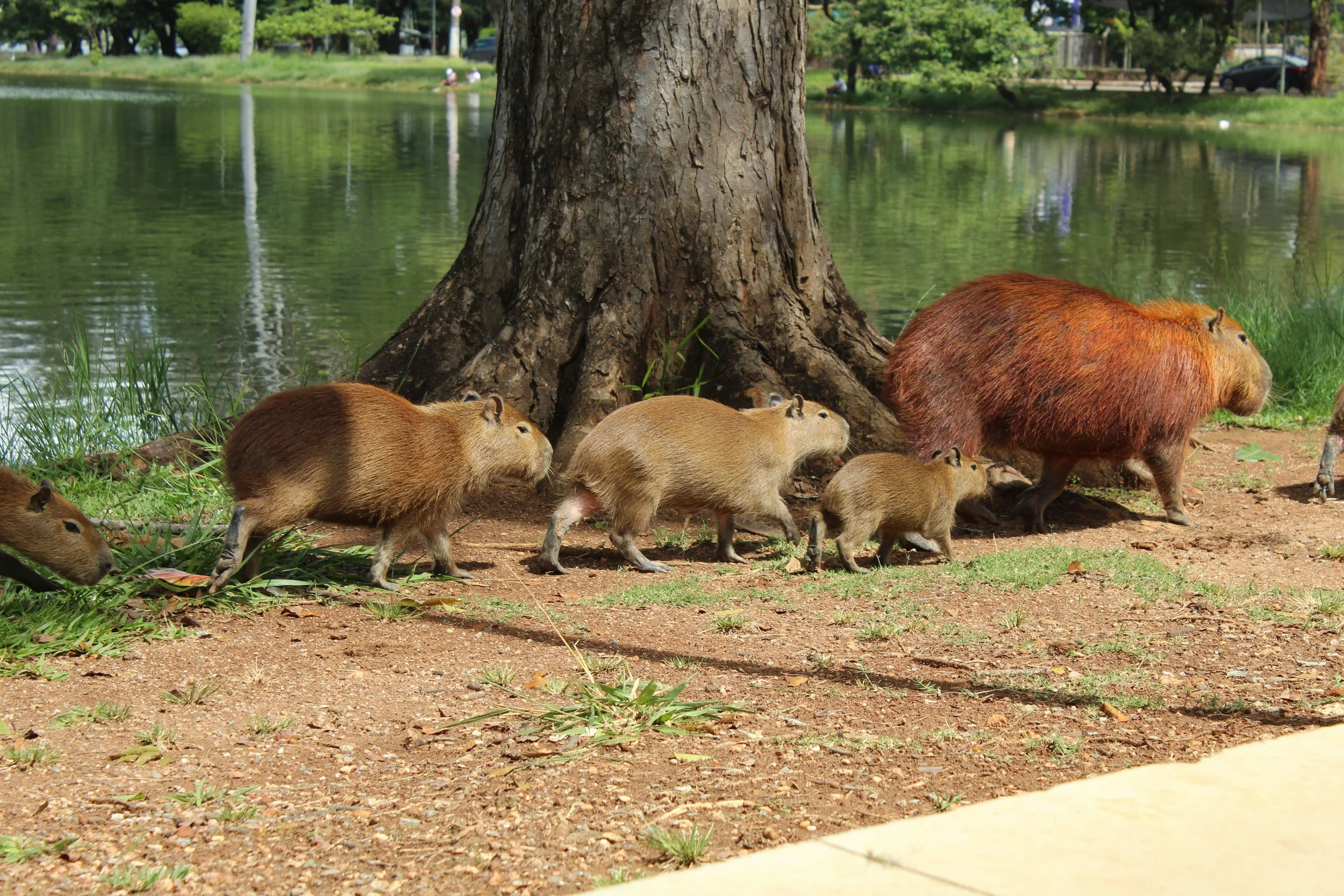
Débora Silvia Racciatti and her research team will assess how different levels of human disturbance are associated with behavioral, physiological, and health-related welfare indicators in capybara (Hydrochoerus hydrochaeris).
Seed Grants
Evaluating ice nests: Effects of a welfare intervention on long-lived insect societies and their guests
Christina Kwapich, University of Central Florida (United States)
$10,000
United States laws increasingly require that species of interest be removed from land marked for development and translocated to suitable sites. For social organisms, the destruction of multi-generational nests, loss of familiar territory, and disruption of demography could negatively influence the welfare of surviving society members, future generations, and dependent symbionts. This project will translocate a population of Florida harvester ant (Pogonomyrmex badius) colonies by burying replica nests made from ice. The team will measure risk-averse behaviors in ants across generations, as well as the stability of colony foraging routes, demography, and the re-colonization of symbiont populations. By monitoring ants in freshly transplanted and historically transplanted colonies, the project will provide data on the effects of social disruption on long-lived animal societies made up of short-lived members.
Why we funded this project
The “ice nest” technique represents a welfare intervention that could mitigate some of the negative effects of social disruption associated with research or land development. By publishing on the feasibility of the ice nest technique, social insect well-being may be given serious consideration in future environmental mitigation and research protocols.
Decoding aquatic mollusk welfare: An investigation of potential physiological and cognitive indicators
Laura Webb, Wageningen University & Research (Netherlands)
$10,000
This project aims to explore physiological and cognitive indicators of welfare in two species of aquatic mollusk: highly mobile cuttlefish (dwarf cuttlefish; Ascarosepion bandense) and sessile (blue) mussels (Mytilus edulis). Valid indicators of mollusk welfare can help us better understand their welfare in changing environmental conditions, such as those associated with climate change. The researchers will explore heart rate variability (mussels) and respiratory variability as possible physiological indicators, and optimism in a judgment bias test as a cognitive indicator of welfare (cuttlefish). Following this, successful metrics can in turn be used to explore the impact of environmental changes on these species' welfare.
Why we funded this project
This project is highly innovative and exploratory in nature, focused on neglected species in welfare research, with sentience accepted for cuttlefish in EU law but not yet for mussels. This work will bring attention to the topic of aquatic mollusk welfare and possible assessment methods in these species.
Validating behavioral, acoustic, and physiological indicators of welfare in urban birds
Miriam Soledad Vazquez, Universidad Nacional del Sur (Argentina)
$9,600
This project will evaluate whether behavioral, acoustic, and physiological indicators consistently reflect welfare-relevant experiences in two urban thrush species that have recently expanded their ranges into Argentine cities. Welfare will be assessed by combining focal behavioral observations (vigilance, aggression, displacement, foraging activity, and tolerance of conspecifics and heterospecifics), passive acoustic monitoring (focal activity rates and calling patterns), and feather glucocorticoid analyses across urban sites that differ in vegetation cover and human disturbance. These indicators will be interpreted together to evaluate whether they show concordant, biologically meaningful responses across urban environments, while recognizing that different indicators may capture different temporal or contextual dimensions of affective state and welfare.
Why we funded this project
The study provides a proof of concept for integrating behavioral observations, passive acoustic monitoring, and physiological measures within a multidimensional welfare assessment framework applied under natural conditions. It also addresses whether commonly proposed welfare indicators remain informative across different species and environmental contexts, including urban environments shaped by human disturbance and novel biotic interactions.
Assessing behavioral and physiological welfare indicators for the Kashmir loach (Triplophysa kashmirensis)
Misba Rehman, Sher-e-Kashmir University of Agricultural Sciences and Technology (India)
$6,500
This project aims to develop and validate non-invasive behavioral and physiological welfare indicators for the Kashmir loach (Triplophysa kashmirensis), small benthic freshwater fish endemic to Himalayan streams. The researchers will observe the fish under natural stream conditions, with underwater cameras recording behaviors like activity, refuge use, foraging, and abnormal swimming patterns. Physiological welfare will be assessed using mucus sampling to measure cortisol concentrations and supplementary indicators including oxidative stress and immune markers. The team will validate indicators by testing their correlation with key water quality parameters. By integrating behavioral, physiological, and environmental data, the project aims to establish the first field-based welfare assessment framework for this species and develop a transferable model for wild freshwater fishes inhabiting mountain stream ecosystems.
Why we funded this project
We hope that this project will result in a field-applicable, non-invasive framework for assessing welfare in free-living freshwater fishes, a group that remains highly understudied in welfare research.