
‘What I cared about all along’: How Researcher Bonnie Flint’s interdisciplinary background led her to wild animal welfare
February 17, 2026
As an undergraduate biology student at Rice University, Researcher & Education Specialist Bonnie Flint was assigned a project: Find some wild animals, observe them for an hour a day, and see what questions come up. She chose a night heron roost in a quiet, remote part of the campus as her study subject.
While Bonnie sat under the live oak trees, watching and taking notes, the hours passed easily. She was fascinated by the birds’ courtship displays, nesting behaviors, and vocalizations. A thought occurred to her: I could do this forever.
Although she didn’t know much yet about cognition or affect, this project was a defining moment. It was the first time she learned to ask questions about wild animals’ lived experiences; why they exhibit certain behaviors. The emergence of wild animal welfare science as a field was still years in the future, but Bonnie had taken her first step on a scientific career pathway that would eventually lead her to that field, where her interdisciplinary research experiences would help her explore big questions about what life is like for wild animals.
•
Bonnie went on to a master’s program in behavioral ecology at Auburn University, and spent her summers doing fieldwork on the vigilance behaviors of Columbian ground squirrels in the Canadian Rockies about two hours from Calgary. After completing her master’s, she had her sights set on a PhD, but decided to take a few years first to build hands-on skills and get to know a diverse set of species. She describes herself as a “traveling biologist” during those years: In a series of internships and field tech positions, she researched nesting loggerhead sea turtles in Florida, helped with a captive breeding program for endangered birds in Hawaii, radio-tracked small forest mammals in Georgia, and more.
Eventually she was ready to become more autonomous and start leading her own research. She found a PhD program at Virginia Polytechnic Institute and State University (Virginia Tech) that involved fieldwork with banded mongooses (Mungos mungo) in Botswana. She had never heard of the banded mongoose before, but Africa sounded exciting. She applied, and she was accepted.
•
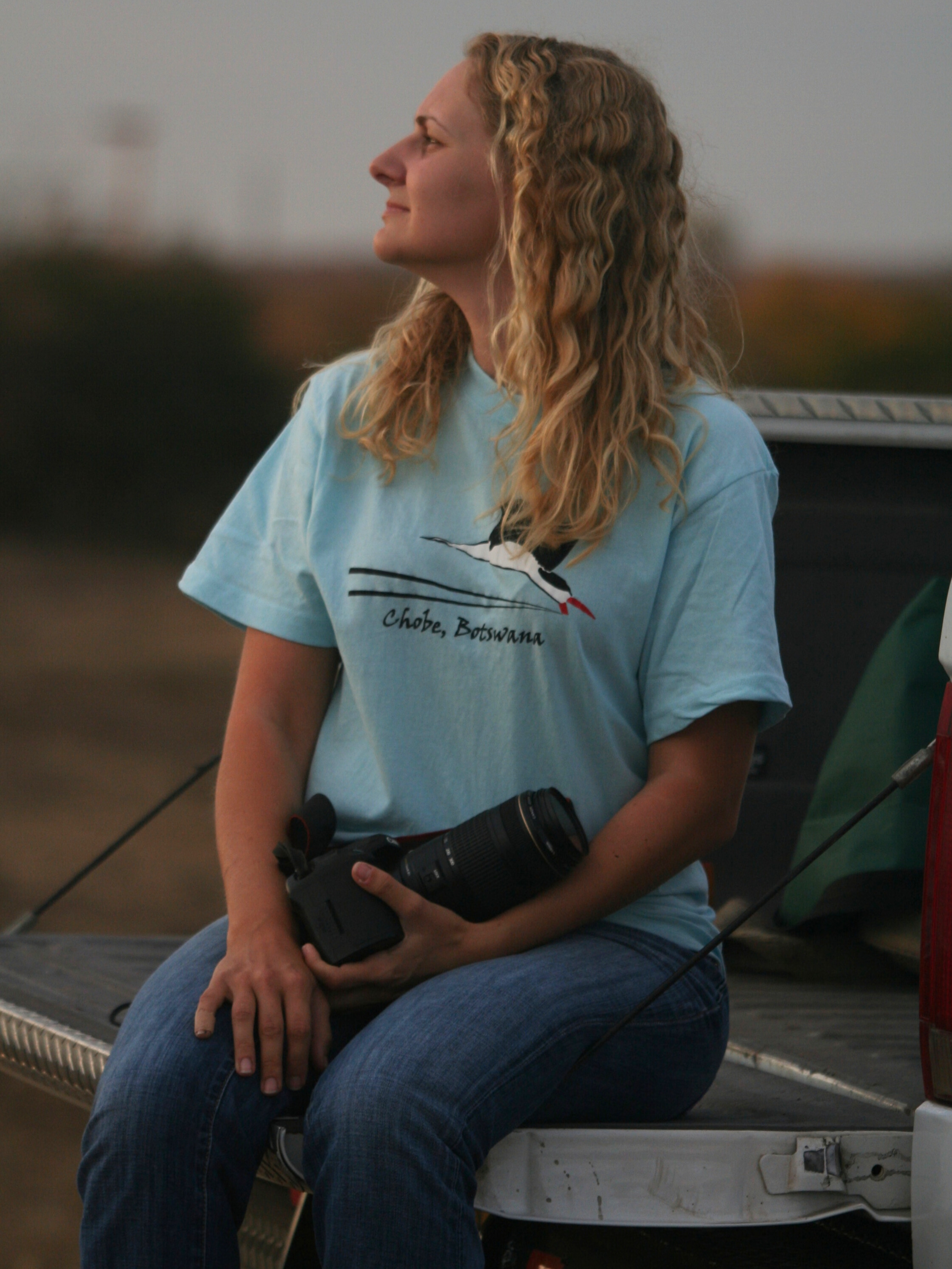
For her fieldwork, Bonnie lived in a small town in Botswana that was a popular destination for wildlife tourism. Among elephants, baboons, crocodiles, and lilac-breasted rollers in that area, the mongooses live in large colonies and often use structures abandoned by other animals, or even humans, as dens.
“You couldn’t find a more fun species to work on,” Bonnie says. “They’re silly and curious, and they love to interact with other animals, including humans. You can’t help but easily fall in love with them.”
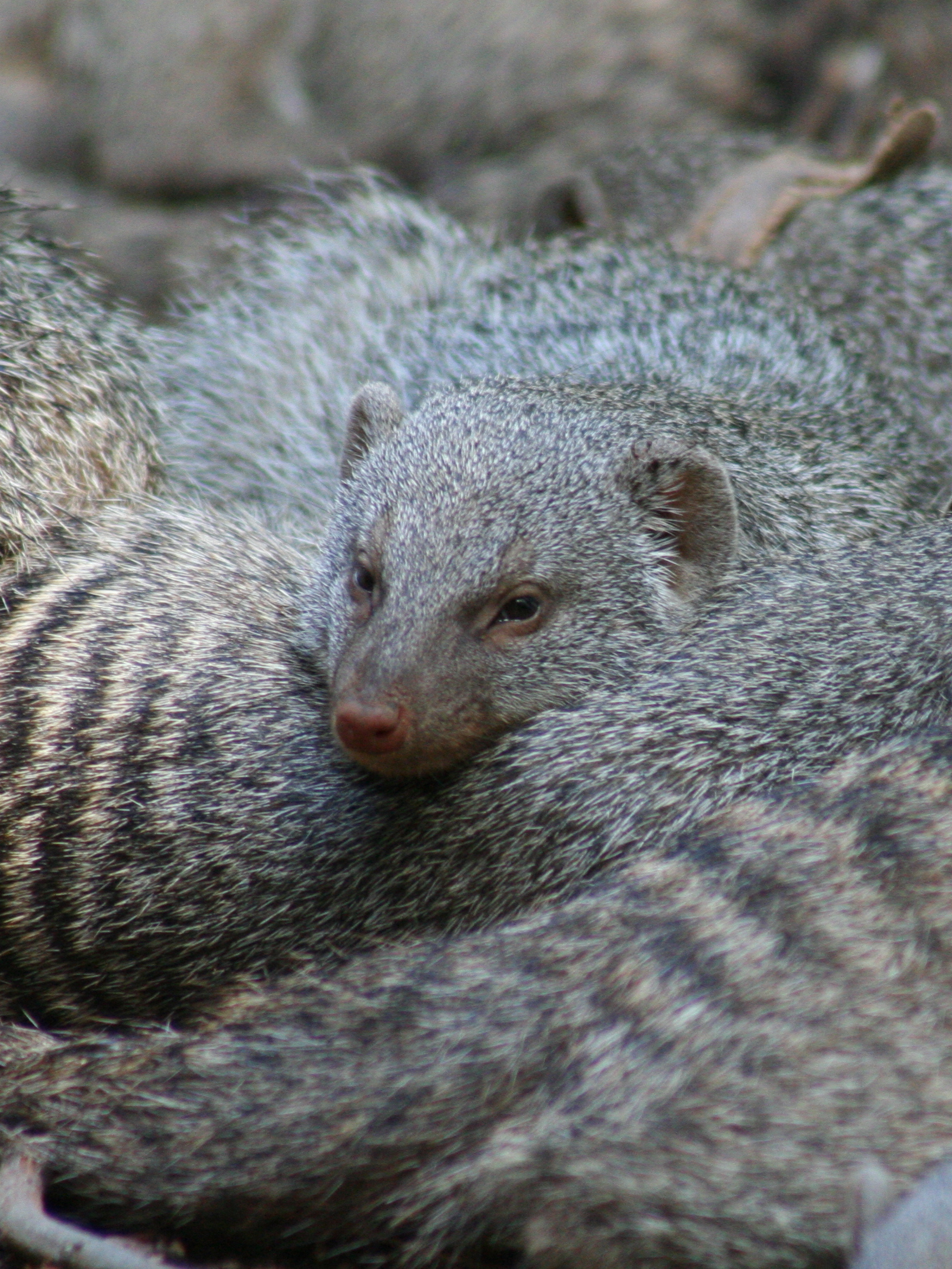
Mongooses typically spread out and dig in the soil for small invertebrates to eat, and foraging that way is peaceful. But on the rarer occasion that one mongoose catches something substantial — a snake; a small bird — a competing mongoose is likely to start a fight over the prey.
Because this was a developed area with human activity, garbage piles were not unusual, and became reliable food sources for some animals. A human’s trash — an unfinished chicken dinner; a steak bone with some scraps left on it — can be a mongoose’s treasure, so many of the mongooses foraged in the garbage piles. This led to a higher-than-normal frequency of fights, which led to a higher frequency of injuries, and open wounds foster infections. Specifically, in this case, infections of tuberculosis.
When Bonnie first arrived in Botswana, her research team did not know how exactly the mongooses were contracting tuberculosis. But through her research, they figured it out: The bacteria were present in the environment, the disease spread by entering open wounds rather than through the air, and the mongooses who foraged at the garbage piles most often were the most prone to injuries, and therefore the most prone to infection.
It was her first introduction to disease ecology, and her first application of what she had learned in graduate classes about physiological ecology. But, although the research outcomes were gratifying and the findings were novel, it was also devastating work. There was no feasible way to treat the mongooses who became sick, and Bonnie’s team did not see a single sick mongoose survive the disease.
“It was really hard to watch,” Bonnie says. “It’s a severe disease in them, and it’s not the same type of TB that humans get, which is just in the lungs. It’s what happens in our lungs, but it happens all over their body, in every organ.”
Bonnie came back from Botswana, finished her PhD, and started thinking about how to move forward in her scientific career. But her work with the mongooses had shaped her perspective on wild animals in a profound way that would stick with her, no matter what was next.
•
A career as a professor didn’t seem like the right fit, but there were some things she enjoyed about teaching. For the next seven years, she taught biology at a college preparatory school in Dallas, Texas, then moved back to Houston to be closer to family and taught at a community college. She also took on a contract role developing the curriculum for a renowned educational video series.
But she missed research. She started looking for opportunities to get back into it.
When she saw a research position open with Wild Animal Initiative, and read about the organization’s efforts to accelerate growth in the nascent field of wild animal welfare science, something clicked. She remembered the mongooses; how she watched them suffer for months with their disease and then ultimately die.
“I thought, this is what I cared about all along,” she says. “When I’ve watched wild animals, I’ve always been interested in how they feel.” She had been interested in studying their welfare and finding out how to improve it — she just hadn’t known there was a community of other scientists getting on board with the same kinds of ideas.
“When I made that connection, that this is why I care about the physiology and the behavior — because the physiology is so impacted by and caught up with the welfare, and the behavior is the expression of what they’re feeling — I realized that this was a part of animal ecology that wasn't being studied. Ecology had included various parts of animals’ lives over time — behavior, physiology, disease, immunity, even some research on cognition in ecology, but little work in the field had truly considered affective states. And I realized that I wanted to understand that.
“What were the most important environmental factors impacting welfare, how do animals make decisions to reach more positive affective states, what happens if they can't achieve those desired states? There was a whole field of questions that had never been asked by an ecologist, and I wanted to start asking them.”