
Our researchers

Bonnie Flint
wild animal welfare | welfare indicators | behavioral ecology | physiological ecology | stress physiology | Urban weLFare EcologyCurrent projects
Testing the validity of several welfare indicators in house sparrows
Assessing the suitability of welfare indicators for wild animals
Integrating Urban Ecology and Wild Animal Welfare Science
About Bonnie
Bonnie Flint is a Researcher and Education Specialist at Wild Animal Initiative and an affiliate of Virginia Tech’s Department of Biological Sciences. Bonnie’s research focuses on identifying and validating behavioral and physiological indicators of welfare, using welfare indicators to assess wild animal welfare, and determining factors that influence wild animal welfare. She is also interested in understanding wild animal welfare in urban spaces. She is the project lead for Wild Animal Initiative’s house sparrow welfare field study.
Bonnie is developing a Professional Competencies Framework for researchers in the field, advises on the development of curricula for wild animal welfare science courses, and previously contributed to the revision of Wild Animal Initiative’s scope of wild animal welfare science.
Previous experience
Before joining Wild Animal Initiative, Bonnie worked on numerous projects in animal ecology and conservation, including Attwater’s prairie chicken conservation, Hawaiian bird conservation, loggerhead sea turtle conservation, small mammal population ecology, behavioral ecology, and disease ecology research. These projects involved fieldwork, including trapping and mist-netting, handling, sampling, telemetry, habituating, and behavioral observation of wild animals; work with captive animals, such as husbandry of highly endangered species; and research, including project management, lab assays, statistical analysis, and the preparation of grants, proposals, and manuscripts.
Bonnie also has extensive teaching and curriculum development experience for high school, college, university, and general audiences, including reviewing popular science education books and developing the curriculum for the popular series Crash Course Biology on YouTube.
Education
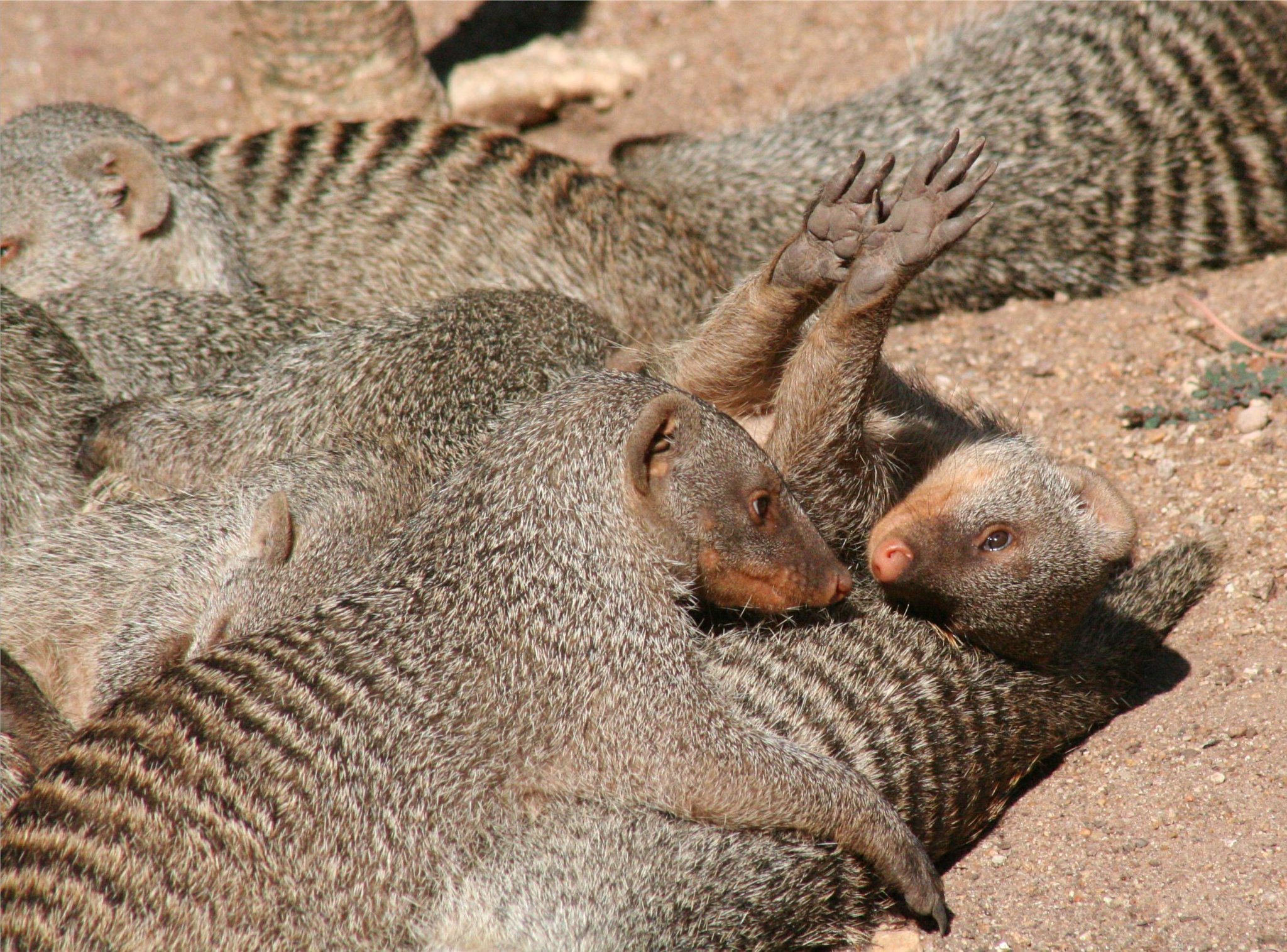
Bonnie earned her PhD in Biological Sciences from Virginia Tech, where her dissertation focused on the behavioral and physiological factors affecting tuberculosis infection in banded mongooses in Botswana. Bonnie earned her master’s degree at Auburn University, where she researched vigilance behavior of Columbian ground squirrels in the Canadian Rocky Mountains, and before that, completed her bachelor’s degree in Biology at Rice University.
Selected publications
*Flint, B. F., & Vernasco, B. J. (2025). Bye-bye bycatch: a remotely closing trap for targeted songbird capture. Journal of Field Ornithology, https://doi.org/10.5751/JFO-00744-960408
Flint, B. F., Hawley, D. M., & Alexander, K. A. (2016). Do not feed the wildlife: Associations between garbage use, aggression, and disease in banded mongooses (Mungos mungo). Ecology and Evolution, 6(16), 5932–5939. https://doi.org/10.1002/ece3.2343
Fairbanks, B. M., Hawley, D. M., & Alexander, K. A. (2015). No evidence for avoidance of visibly diseased conspecifics in the highly social banded mongoose (Mungos mungo). Behavioral Ecology and Sociobiology, 69, 371–381. https://doi.org/10.1007/s00265-014-1849-x
Fairbanks, B. M., Hawley, D. M., & Alexander, K. A. (2014). The impact of health status on dispersal decisions in banded mongooses (Mungos mungo). Ecohealth, 11, 258–262. https://doi.org/10.1007/s10393-014-0912-4
Fairbanks, B. M., & Hawley, D. M. (2012). Interactions between host social behavior, physiology, and disease susceptibility: The role of dominance status and social context. In G. Dumas & R. Nelson (Eds)., Eco-Immunology. Oxford University Press.
Fairbanks, B. M., & Dobson, F. S. (2010). Kinship does not affect vigilance in Columbian ground squirrels (Urocitellus columbianus). Canadian Journal of Zoology, 88(3), 266–270. https://doi.org/10.1139/Z10-001
Fairbanks, B. & Dobson, F. S. (2007). Mechanisms of the group size effect on vigilance in Columbian ground squirrels: Dilution versus detection. Animal Behaviour, 73(1), 115–123. https://doi.org/10.1016/j.anbehav.2006.07.002
Fairbanks, B. (2006). Osprey captures least tern in flight. Florida Field Naturalist, 34(4), 117. https://digitalcommons.usf.edu/cgi/viewcontent.cgi?article=2095&context=ffn
Swint-Kruse, L., Zhan, H., Fairbanks, B. M., Maheshwari, A., & Matthews, K. S. (2003). Perturbation from a distance: Mutations that alter lacI function through long-range effects. Biochemistry, 42(47), 14004–14016. https://doi.org/10.1021/bi035116x
*Denotes papers published while working at Wild Animal Initiative.