Results of our 2024 staff diversity survey

December 1, 2025
Each year, our internal Justice, Equity, Diversity, and Inclusion (JEDI) Committee conducts an anonymous survey of our staff’s diversity and feelings about what it’s like to work at Wild Animal Initiative.
At the time of the 2024 survey administration, there were 21 full-time staff members at WAI, all of whom were invited to participate in the survey. 17 of 21 (81%) participated, and their responses have been aggregated in the data below.
The individual, anonymous survey responses were visible to one JEDI Committee member, who analyzed the data. The full Committee then reviewed the aggregated results for areas of success and areas with room for improvement, and shared the results with all staff members.
Below are some highlighted data and notable insights from the 2024 staff survey results.
Diversity
The demographics section presented here features data on race, ethnicity, gender, and sexuality. The full survey also included questions about dimensions such as disability status, neurodiversity, and educational background.
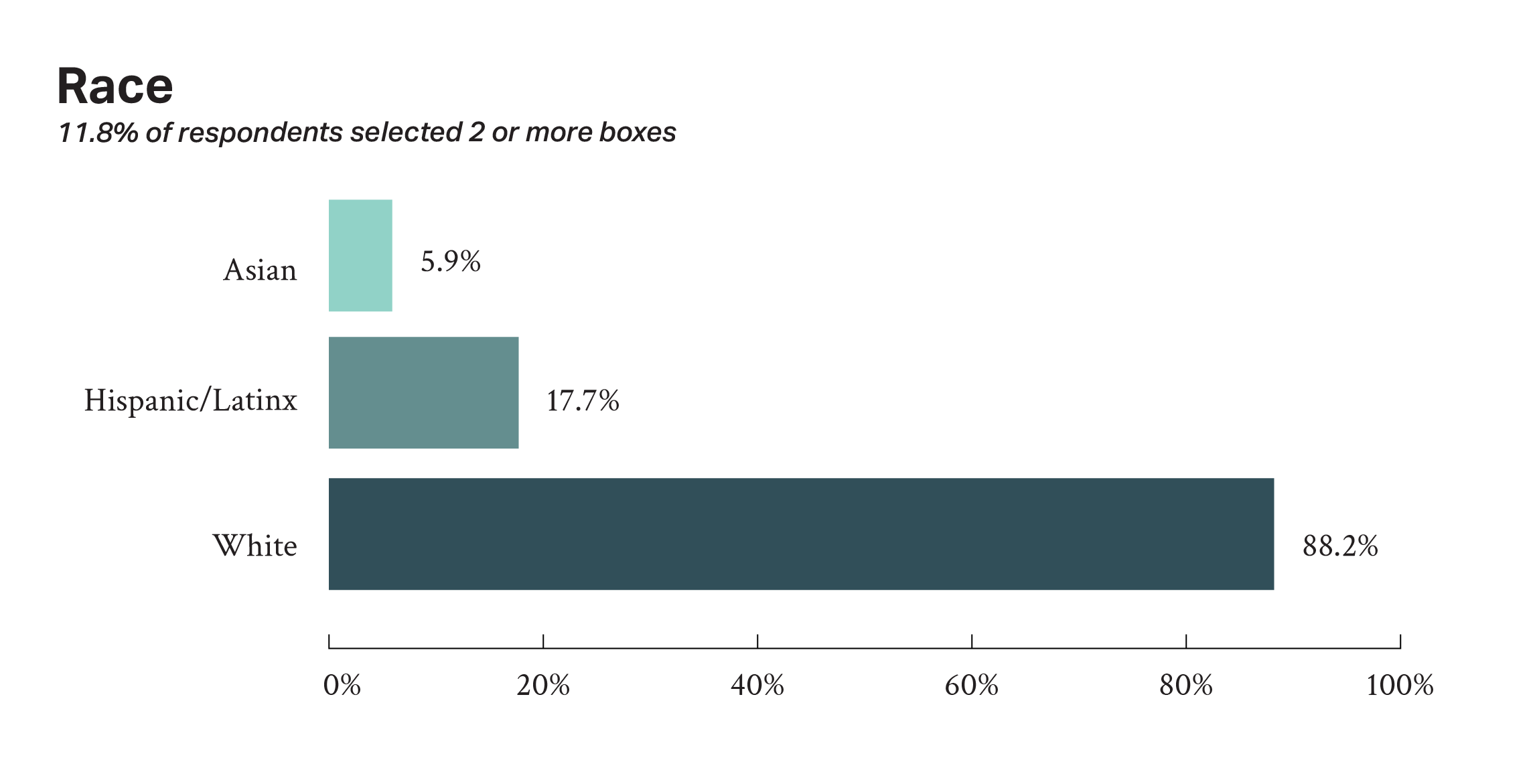
Race and ethnicity
White: 88.2%
Hispanic and/or Latin(a/o/e/x): 17.7%
Asian: 5.9%
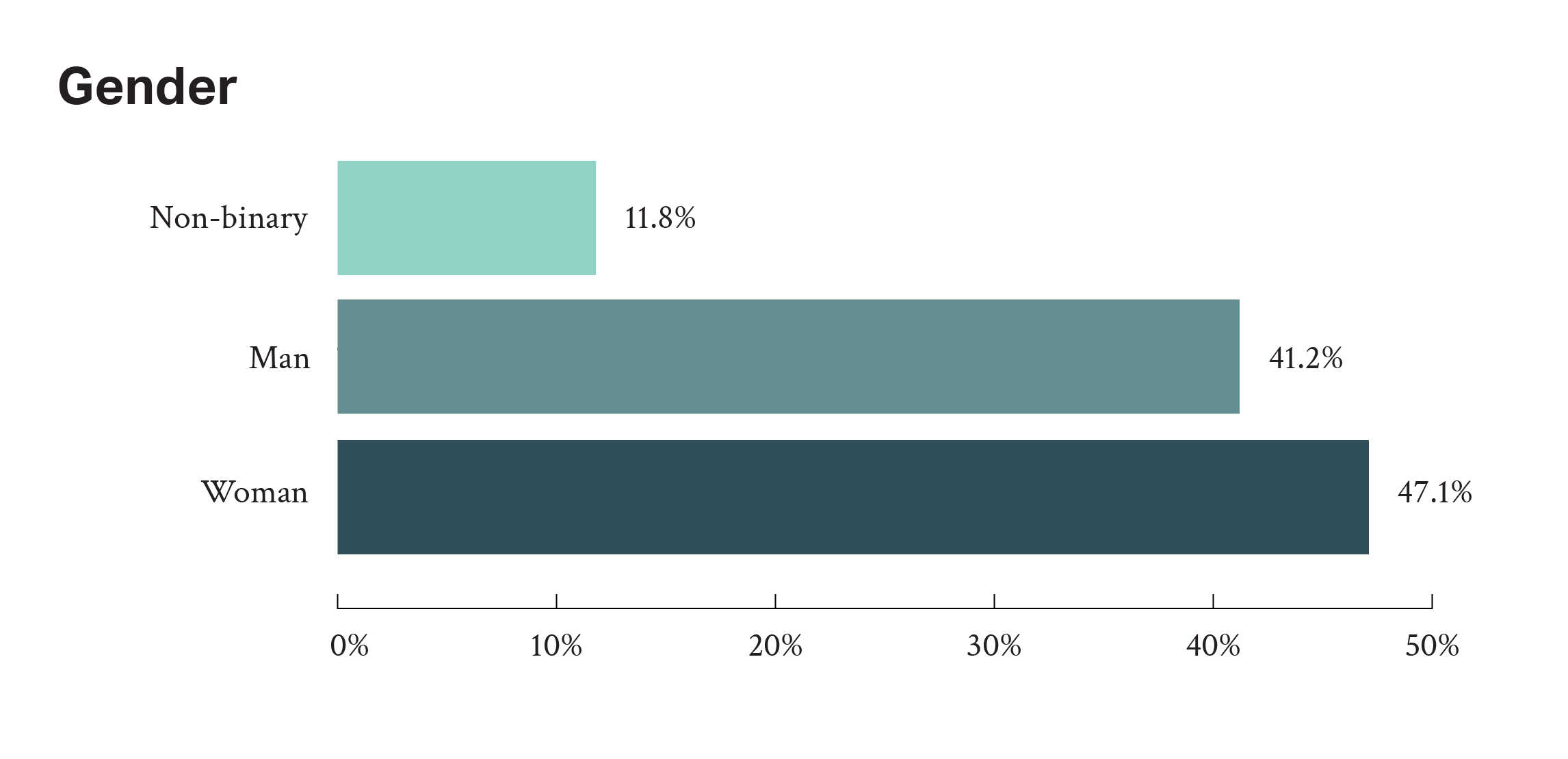
Gender
Identify with the same gender as the one assigned at birth: 76.5%
Identify with a gender different from the one assigned at birth: 17.6%
Sometimes identify with a gender different from the one assigned at birth: 5.9%
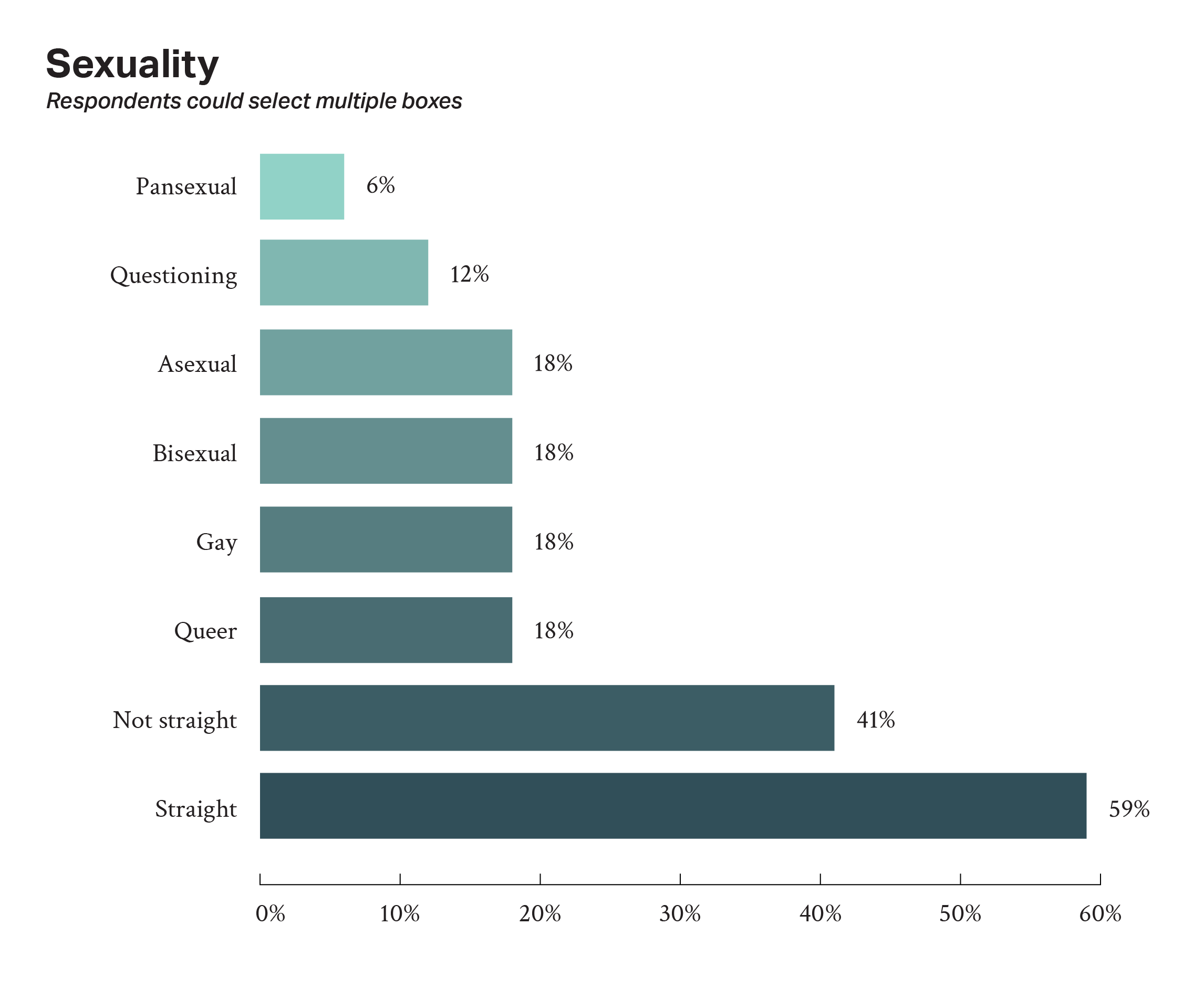
Sexuality
Straight: 59%
Not straight: 41%
Asexual: 18%
Bisexual: 18%
Gay: 18%
Queer: 18%
Questioning: 12%
Pansexual: 6%
Belonging
In addition to demographic questions, the full survey asked about feelings of belonging and psychological safety at WAI, emotional engagement and drive at work, and factors that contribute to staff retention.
The majority of staff reported overall positive feelings about working at WAI. Some of the highest contributors to these feelings were:
Feeling aligned with the mission and purpose of WAI
Feeling that it’s okay to make mistakes at work
Sufficient opportunities to learn and grow
However, this year’s survey identified increased disparities in feelings of belonging between neurodivergent and neurotypical groups, and 1–2 individuals reported feeling less belonging and comfort at work than we view as acceptable. Some of the contributors to low feelings of belonging were:
Lack of opportunities to connect with colleagues in other departments
Lack of feedback on long-term growth and progress at work
Comfort being oneself at work, without fear of rejection
How we will use the survey data
This year’s survey is part of our intention to continually assess whether Wild Animal Initiative is an inclusive and equitable place to work. Our JEDI Committee repeats this survey annually so we can stay up to date on the diversity represented among our employees at any given time, and so we can track changes over time.
Based on the 2024 survey results, the JEDI Committee has identified elements of our staff diversity and belonging with room for improvement. After discussion, they will make recommendations to leadership to address the needs identified by the survey. Leadership will then work with our Operations Team to identify and implement concrete steps to address these needs.
Changes that our Operations Team has already made since running the 2024 survey may contribute to improved scores in some areas. For example, in 2025, we implemented a new performance review process that facilitates more regular and structured opportunities for feedback on employee progress. WAI staff also participated in trainings on neurodiversity this year, and made adjustments to our all-staff retreat to make activities more accommodating and sensory-friendly. And, although connecting to colleagues while working remotely remains a challenge, we have increased the number of social opportunities like virtual “coffee chats” and all-staff social gatherings offered.
We plan to regularly check for improvement and make adjustments as needed to ensure that we achieve and sustain a work environment that fosters diversity, belonging, satisfaction, drive, and psychological safety for everyone.
We also plan to use the data to measure whether we successfully recruit employees from different backgrounds at all levels of our organizational structure. We want a staff that represents plurality in perspectives and ways of thinking so we can make the best possible decisions about our mission to accelerate science that helps wild animals.
If you have ideas about how to measure and improve representation in our organization, or if you have suggested reading you'd like to share with us, please contact our Justice, Equity, Diversity, and Inclusion Committee at jedi@wildanimalinitiative.org.