
Wild animal welfare research highlights: 2025
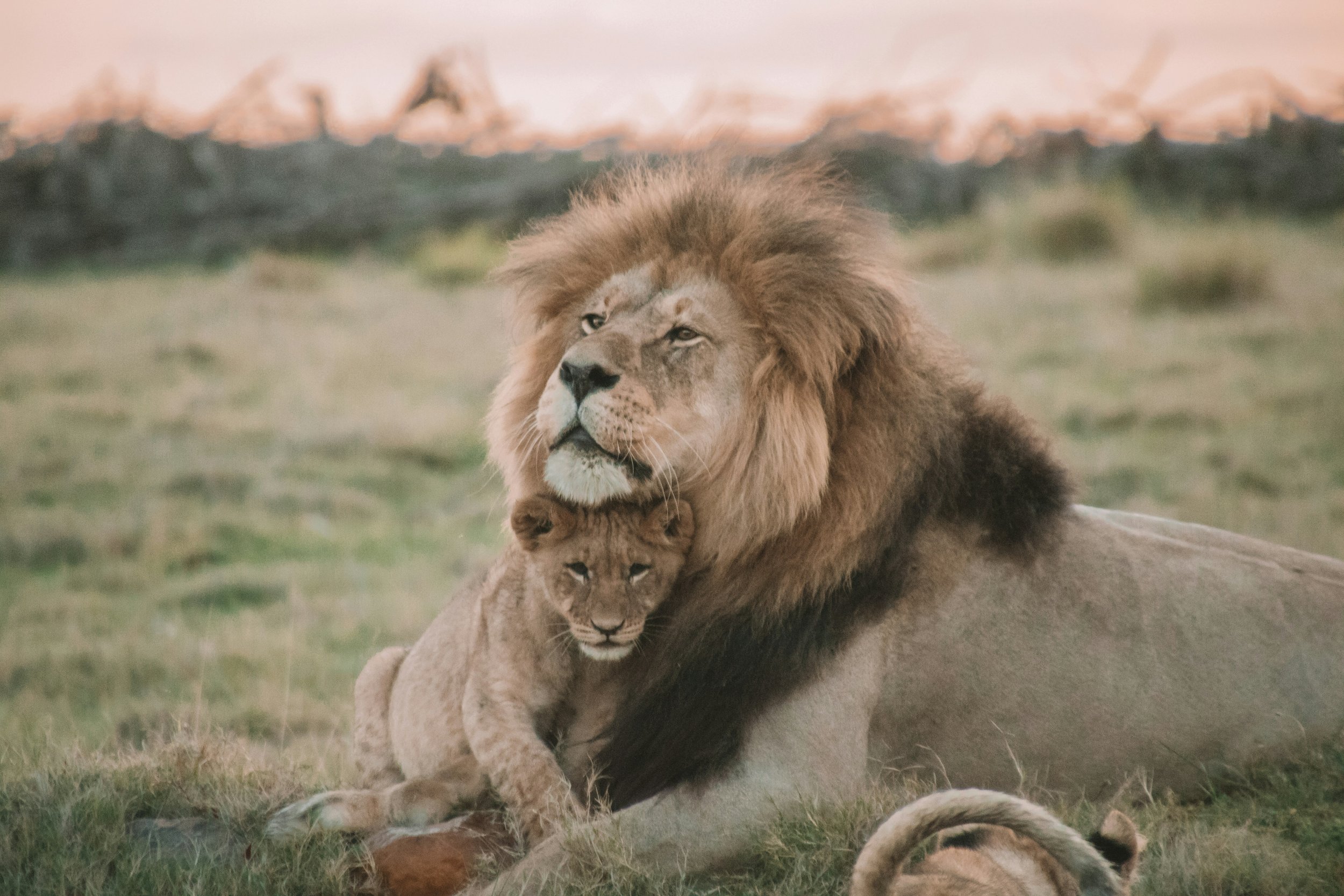
Wild Animal Initiative grantee Paula Serres-Corral published two papers in 2025 that demonstrated the ability to measure welfare indicators in lion feces. Researchers can now use these methods to assess the welfare of multiple free-ranging social carnivore species.
January 5, 2026
Wild Animal Initiative supports research in wild animal welfare science to catalyze activity in the field and ensure that as it grows, the knowledge the field produces will help as many wild animals as possible.
We’ve brought together a selection of noteworthy papers published by Wild Animal Initiative researchers and grantees in 2025 to showcase their contributions to the field — spanning advances in welfare measurement, rehabilitation ethics, and disease impacts. You can find more of the year’s papers here.
The use of a severity index to analyse impact of bacterial zoonoses on welfare of wildlife populations
Kristen Hirst & Samniqueka Halsey
Animal Welfare
Outbreaks of zoonotic diseases can devastate wild animal populations, but there has been very little research on how pathogens impact wild animal welfare. Hirst and Halsey created a severity index to measure how pathogens physically impact the host and their welfare using the Five Domains (Nutrition, Environment, Health, Behavior, and Mental State) as a framework for assessment. The severity index can be used by future researchers to incorporate welfare into investigations of the broad impacts of disease on wild animals.
Development of a Methodology for Measuring Oxytocin in Feces: Insights from a Preliminary Study in Captive Lions (Panthera leo)
Paula Serres-Corral et al.
Animals
Oxytocin has become a central focus in animal welfare research because of its role in regulating stress and promoting positive affective states. Commonly measured in blood, saliva, and urine, oxytocin’s presence in feces has not yet been studied. But because fecal samples can be collected noninvasively, fecal oxytocin could be used to monitor the welfare of free-ranging animals. This study used lions (Panthera leo) as a model species to validate a method for detecting oxytocin in feces, describe baseline fecal oxytocin patterns, and evaluate fecal oxytocin’s relationship with fecal glucocorticoid metabolites under non-stressful conditions. Serres-Corral et al. successfully validated a methanol-based extraction and commercial enzyme immunoassay, marking the first demonstration of fecal oxytocin detection.
Exploring immunoglobulin A as a stress biomarker in lions (Panthera leo): Validation of an immunoassay for its measurement in feces
Paula Serres-Corral et al.
Comparative Biochemistry and Physiology Part A: Molecular & Integrative Physiology
The antibody Immunoglobulin A (IgA) has been investigated as a stress biomarker with the potential to complement glucocorticoid measurements in welfare assessments. In this paper, Serres-Corral et al. develop a methodology and validate an enzyme immunoassay for quantifying IgA in lion feces. They also investigate excretion patterns of fecal IgA under baseline conditions in captive lions, and explore its relationship with fecal glucocorticoid metabolites. This study demonstrates for the first time that IgA can be reliably quantified in lion feces, paving the way for its application in welfare studies.
A framework for the ethical use of animal-borne devices in post-release monitoring following rehabilitation
Jessica Harvey-Carroll, Daire Carroll, Cara-Marie Trivella, & Ellen Connelly
Wildlife Biology
Conservation researchers often use animal-borne devices like tags, microphones, and GPS transmitters to monitor rehabilitated animals following their release into the wild. These devices are useful for monitoring released animals to understand what factors contribute to their survival or death, but they may impact the welfare of the animals they are attached to or inserted inside. In this paper, Harvey-Carroll et al. propose a framework for applying the four Rs of ethical animal research (Replacement, Reduction, Refinement, Responsibility) to the use of animal-borne devices during post-release monitoring. As a case study, they develop a set of guidelines for the ethical use of biologging devices during post-release monitoring of ground pangolins (Smutsia temminckii).
Rehabilitating wild animal welfare: A focus on veterinary rescue and rehabilitation interventions
Research in Veterinary Science
Many veterinarians who work with wild animals do so as part of rescue and rehabilitation programs. Wildlife rehabilitation is typically seen as a conservation tool, but its effectiveness in achieving conservation goals has been questioned. In this paper, Beaulieu argues that one reason wildlife rehabilitation might fall short as a conservation intervention is that it’s actually primarily motivated by concern for wild animal welfare rather than conservation. According to Beaulieu — himself a veterinarian — this motivation has been overlooked in part because veterinarians do not always recognize the distinction between conservation and wild animal welfare. As a result, they may be unaware of the fact that what is beneficial for wild animal welfare may not always be beneficial for conservation. In the paper, Beaulieu argues that veterinarians could better communicate the values motivating wildlife rehabilitation and explicitly value wild animal welfare for its own sake.