
Integrating welfare into coyote research and management
April 14, 2026
Coyotes (Canis latrans) are one of North America's most adaptable wild animals — and one of its most managed. From lethal culls in agricultural areas to coexistence programs in major cities, humans are constantly making decisions that affect coyotes’ lives. But there's a dimension of those decisions that rarely gets considered: whether individual coyotes are suffering.
What if researchers and wildlife managers began to ask not just how to control coyote populations, but how to improve coyote welfare?
How coyote management is evolving
“We’ve moved from, ‘If there’s a coyote in a parking garage, do we shoot them?’ to ‘If there’s a coyote in a parking garage, do we relocate them or leave them alone and let them work it out?’ That’s a very different debate,” says Chris Nagy.
Chris is the co-founder of Gotham Coyote, a collaborative project that brings together researchers, educators, and students to study the ecology of the northeastern coyote (Canis latrans thamnos) in New York City.
Chris has been studying ecology in New York for the past 20 years. In that time, he’s noticed a change in New Yorkers’ attitudes towards coyotes, and a corresponding difference in how they’re managed.
Where a coyote wandering the streets of Manhattan may once have resulted in a televised helicopter chase, their presence in and around Central Park is no longer seen as a great cause for concern. Chris guesses that the vast majority of people living in New York are not even aware that they share their city with coyotes.
This increased indifference towards the wild mesopredators in the city is representative of a wider attitude shift that extends beyond New York.
For a long time, coyote management focused almost exclusively on lethal control, with coyotes seen as threats to human property. This approach has not disappeared, and many still view coyotes as “pests” — particularly in agricultural areas and in cities like Los Angeles, where there has been more human–coyote conflict. But more tolerant approaches are also emerging, and new questions are being asked about coexistence, adaptive management, and conflict mitigation.

Coyotes are adaptable enough to survive in cities, where they can adjust their diet based on what food sources are available, and take advantage of the cover provided by habitat fragments like New York’s Central Park.
One commonality on both sides of the management spectrum, though, is that success is typically evaluated using population-level outcomes like regulating population size and density, maintaining ecosystem health, and reducing human–coyote conflict. In part, this is because the presence of coyotes in an ecosystem can trigger trophic cascades and influence other species’ population sizes, so population-level management is an important concern in wildlife management aimed at preserving ecosystem health. But limiting our understanding of coyotes to populations may obscure another motivation that researchers, wildlife managers, and the public may not realize they have.
Welfare challenges in urban coyote populations
Chris Nagy says that when people ask him why they should tolerate coyotes in New York, it’s usually the interests of the coyotes themselves that he thinks of. “You can start making arguments about how they control the rodent population, but two coyotes in Central Park are not going to touch the rat population. So I often say, ‘Well, because it’s the right thing to do. Or because coyotes are really cool. Or because we have an ethical obligation to respect other living things.’”
When we begin to consider the interests of individual coyotes, a possibility arises: Some of the challenges coyotes face in urban environments may mean that individual welfare is poor, even if overall population sizes or ecosystem dynamics are responding well to management.
One likely threat to coyote welfare is secondary poisoning from rodenticides. “Coyotes are dying from eating poisoned rodents, and the effects of the rodenticides probably mean they’re in a lot of pain and discomfort leading up to their deaths,” Chris says.
Welfare issues like these present additional challenges for researchers and wildlife managers. “If you’re just looking at the population level, coyotes in California, for instance, are not going to go extinct any time soon,” Chris says. “So do you look at the poisoning and say, ‘They’re fine?’ Even if your job is population-scale, I hope there are very few biologists who would say, ‘Don’t worry about the pain and suffering.’”
Sarcoptic mange is another potential welfare threat. Highly prevalent in urban and suburban coyote populations, it causes intense itching, hair loss, secondary infections, and hypothermia. Chris says there have been a few cases of mange in New York City coyotes. “Last summer, there seemed to be more than usual. And the animals are miserable. It’s a terrible way to die.”
In addition to rodenticides, mange, car collisions, and behavior shifts in response to large human populations, coyotes may also face naturally occurring welfare threats like starvation, territory disputes, or hunting injuries.
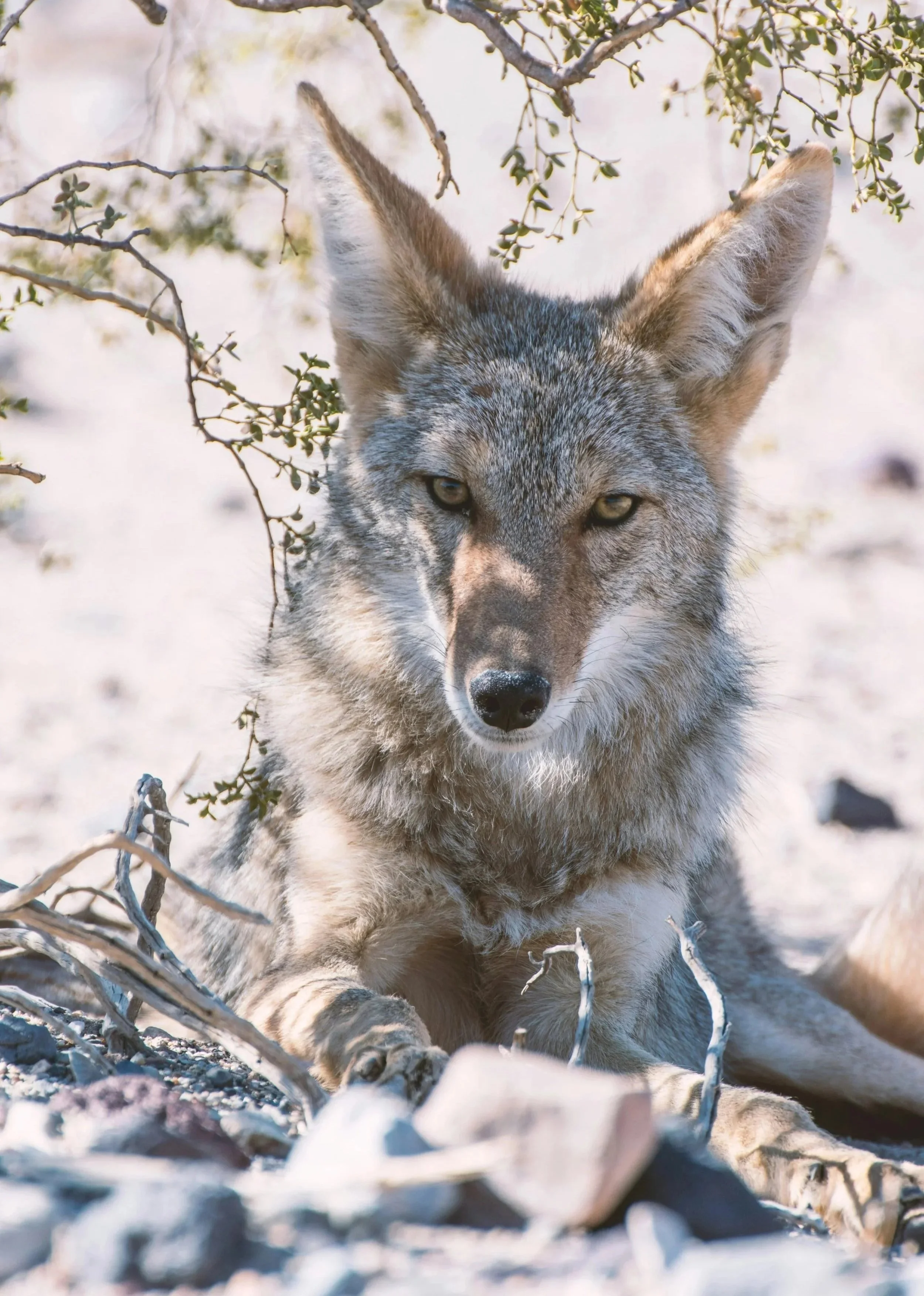
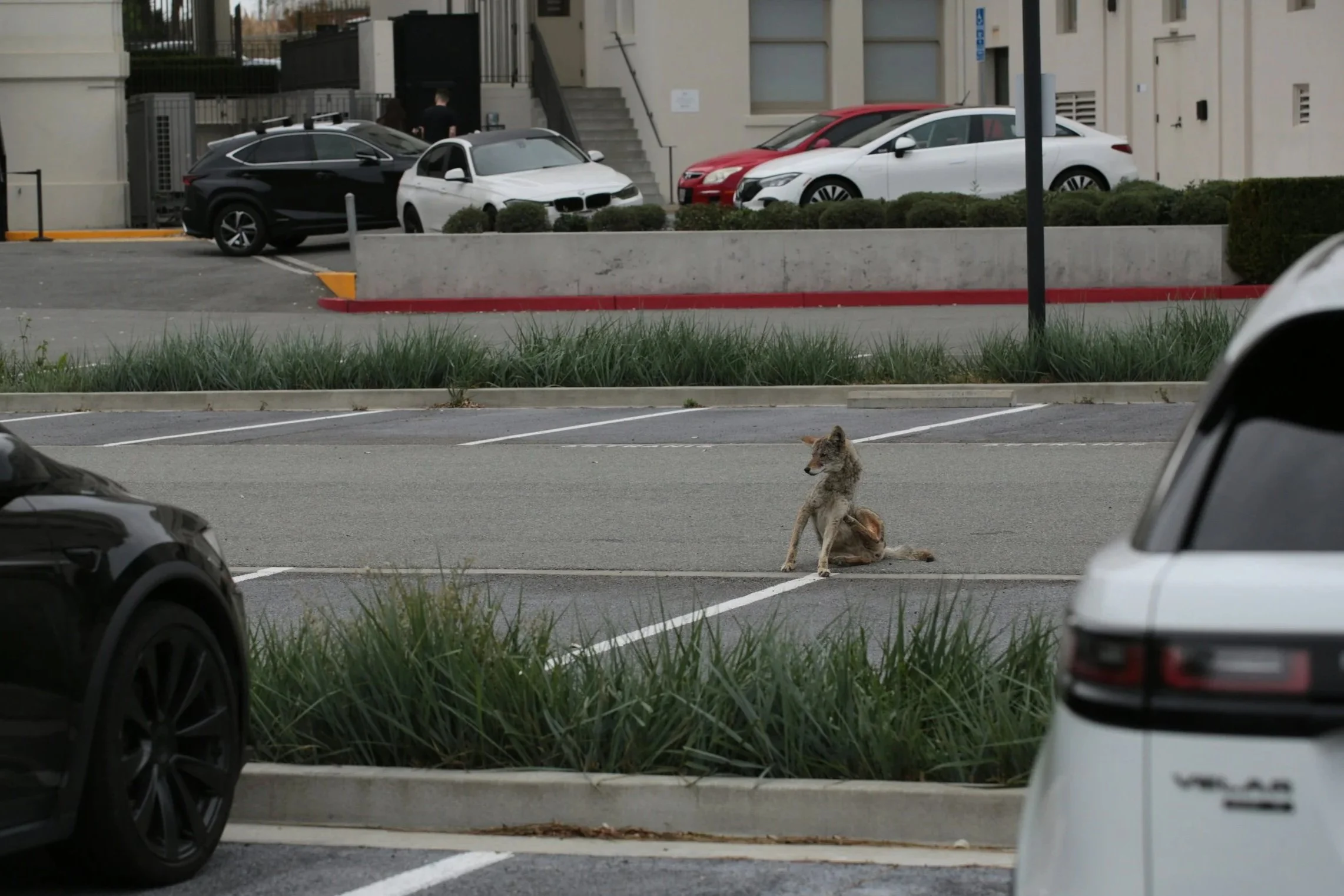
Welfare threats like these could be allowed to run their course. But because humans already manage coyotes — especially in cities — our actions are inevitably already affecting their welfare, and in ways we haven’t been monitoring. It’s possible that lethal population control and aversive conditioning could be causing injury or chronic stress, for instance. But even non-lethal management approaches like translocation or attractant management could be influencing factors like social group dynamics, intraspecific conflict, disease transmission, or parental care. And just as coyote behavior can have indirect ecological effects, coyote management may have unanticipated impacts on the welfare of other species, too, including those they prey upon.
Incorporating welfare into research and wildlife management
Because coyotes live close to humans, they bring animal ecologists and wildlife managers into the same sphere. While ecologists ask questions about how coyotes interact with their environment to survive and reproduce, wildlife managers draw on ecological principles to control aspects of wildlife populations like size, growth rate, and disease rates — particularly to mitigate human–wildlife conflict or implement conservation measures. Sitting at the intersection of wildlife management, ecological theory, and applied urban ecology, urban coyote research is a productive place for wild animal welfare theory and intervention to meet.
As Chris points out, urban ecologists are already asking some of the foundational questions that can help us understand the welfare of coyotes and the species they interact with: “What are the drivers of where coyotes tend to be in an urban environment? What factors lead them to behave in a way that is beneficial for them in the long term? Why would a coyote choose to do one thing versus another, and in what circumstances?”
Ecologists already study welfare-relevant dimensions like animal behavior, disease ecology, stress physiology, conflict, and population dynamics. Welfare can be a unifying lens across these domains, and a way to ask new questions of existing data. When do natural ecological processes generate the worst welfare outcomes? How does personality impact welfare outcomes, and how do personality and welfare interact to impact fitness? Does average welfare vary across taxa or across ecosystems? Can positive welfare create ecological traps?
Incorporating welfare into management science, meanwhile, could mean asking how management actions shift the distribution of welfare states, or which interventions reduce total suffering. Operating at scales finer than the population level in management science not only sheds light on the overlooked dimension of welfare, but can fill knowledge gaps in wildlife science and conservation. As Chris notes, “More and more ecologists are noting that individual animals have their own patterns, behavior, and preferences.” Studying welfare is a natural extension of existing work on behavioral plasticity, coexistence strategies, and management interventions, to name a few research areas.
Like conservation, wild animal welfare is a science driven by values — that is to say, as Chris puts it, a science in which the goal is not “‘Let’s document the nightmare and put it in a notebook.’ We’re using science, but we also have a certain set of values placed on top of it — we’re motivated to fix some wrong or make the world better.”
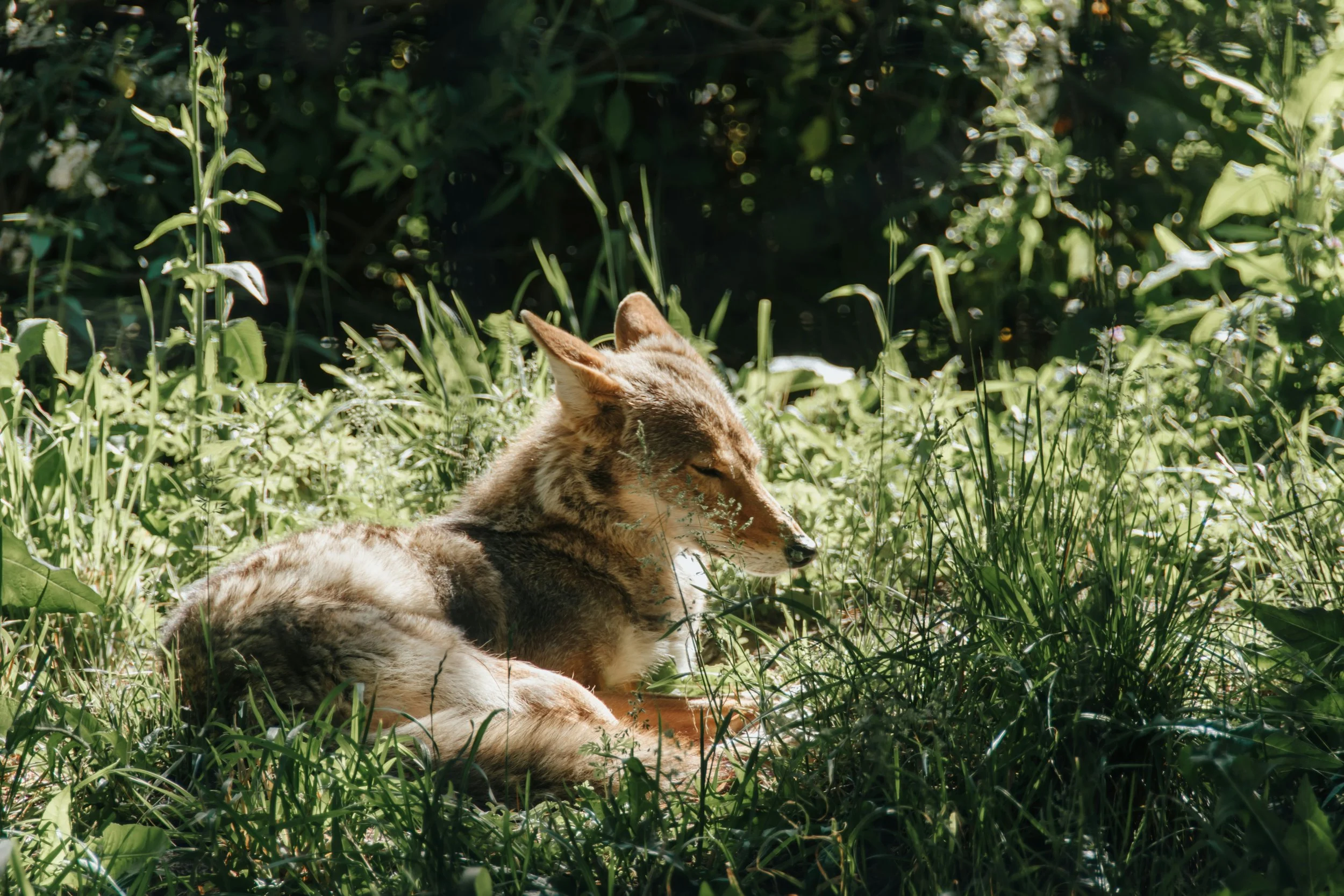
Finding out how environmental factors affect urban coyote welfare can help us design ways to ensure that coyote management has positive welfare outcomes.
But persuading policymakers to take action to improve coyote welfare is more challenging than convincing them to consider the needs of the rare or charismatic species in their cities, like peregrine falcons or bumblebees. “You can get a lot of cities and governments to say, ‘We’re going to tolerate coyotes,’” Chris says. “But ‘We’re going to try to help them’ is a big jump.” Still, Chris believes there are promising lines to take, like, “‘Well, we’ve got coyotes. And we don’t want them to suffer until they die a torturous death. So let’s take care of the mange thing, or if we don’t want them to get rabies, maybe we do some rabies research and treatment.’”
Researchers and wildlife managers can help position coyote welfare as an accepted concern by working on welfare-relevant questions.
Research directions
To ultimately be able to improve coyote welfare and reduce the suffering of the other species they live alongside, we need to understand and measure welfare — then design welfare interventions based on those insights and assess their effectiveness.
Possible research directions for urban ecologists and wildlife management scientists interested in studying coyote welfare or net welfare in urban ecosystems include:
Identifying and validating indicators of welfare in free-ranging coyotes
Modeling how density, connectivity, resource distribution, or human presence affect welfare
Assessing the welfare impacts of rodenticides or mange
Comparing welfare outcomes across management strategies — aversive conditioning, for instance, is effectively the practice of decreasing welfare to encourage an animal to move elsewhere. What are the welfare impacts of this versus increasing welfare in the location you hope the coyote will move to?
Studying what environmental conditions lead coyotes to settle in a particular location and how urban design can support coyote welfare
Wild Animal Initiative supports research on questions like these. If you’re curious about how to apply your particular expertise to a research project on coyote welfare, get in touch with us. We can offer advice, direct you to funding opportunities, or introduce you to our network of researchers to help you find other scientists who are interested in the welfare of urban wildlife.