
Meet our grantees
Wild Animal Initiative funds academic research on high-priority questions in wild animal welfare.
The goal of our grants program is to fund research that deepens scientific knowledge of the welfare of wild animals in order to better understand how to improve the welfare of as many wild animals as possible, regardless of what causes the threats to their well-being.
We showcase our grantees and their projects here and continuously update this page as new projects are added.
Every breath you take, I‘ll be watching you: Automated measurement of breath rate from mobile phone videos as a severity assessment parameter in wild great tits
Grantee: Caroline Deimel
Institution: Max Planck Institute
Project summary
This project aims to provide a validated reference tool for standardizing breath rate (BR) measurements following capture and physical sampling protocols in wild birds. The researchers will use computer vision capabilities and other recently developed software improvements to estimate BR metrics from mobile phone videos, enabling the collection of objective, reproducible, and comparable data, and providing institutions tasked to oversee animal welfare with objective and feasible monitoring requirements. The project will also evaluate BR as a welfare indicator in great tits by analyzing an existing five-year dataset to test whether BR corresponds to simultaneous glucocorticoid measurements from free-living great tits. This data will provide reliable baselines and ranges for glucocorticoids and BR, and benchmarks for video recording lengths.
Grantee: Caroline Deimel
Institutions: Max Planck Institute, Germany
Grant amount: $19,200
Grant type: Small grants
Focal species: Great tits (Parus major)
Conservation status: Least concern
Disciplines: Animal behavior, animal welfare science, physiology
Research location: Germany
Project summary
Breath rate (BR) is increasingly used as a non-invasive proxy of stress that is fast, cheap, and field-friendly. However, BR has not been evaluated in a bird welfare context, and it is unclear how it relates to established physiological proxies of stress, like glucocorticoid measurements in blood. Also, the currently used protocols to measure BR lack standardization, scalability, and validation. This project aims to provide a validated, non-invasive reference tool for standardizing BR measurements following capture and physical sampling protocols in wild birds by implementing computer vision capabilities and other improvements in software the researchers have recently developed to estimate BR metrics from mobile phone videos. This will allow the research community to gather objective, reproducible, and comparable data, and provide institutions tasked to oversee animal welfare with objective and feasible monitoring requirements. The project will also evaluate BR as a welfare indicator in great tits (Parus major), a songbird extensively used in wild animal research across Europe, by analyzing an existing, five-year dataset to test whether BR corresponds to simultaneous glucocorticoid measurements from free-living great tits. These data will provide reliable baselines and ranges for glucocorticoids and BR, and benchmarks for video recording lengths.
Why we funded this project
We are generally interested in developing non-invasive ways of measuring indicators of wild animal welfare. One of the key advantages to non-invasive measurement, besides the obvious of not causing unnecessary fear or pain to animals, is that stress induced by the measurement process can obscure the animal’s baseline stress levels if the method is too invasive or not carried out properly. We also tentatively believe that instilling a norm of minimizing animal harm within welfare biology research will increase the likelihood that researchers act as scientist-advocates for implementation of wild animal welfare interventions. This project’s focus on making breath rate easy and inexpensive to measure in a consistent way also fits well with our desire for a greater volume and accessibility of welfare data collection.
City living – assessing the welfare costs of urban living in spotted hyaena (Crocuta crocuta)
Grantee: Emma Stone
Institutions: Carnivore Research Malawi, University of the West of England
Project summary
Networks of green spaces and river corridors support a population of urban spotted hyenas in Lilongwe City, Malawi. However, human-wildlife conflict (HWC) is frequent. Using non-invasive techniques, this project will measure and compare the fecal and hair cortisol levels, mean body condition, tooth ware, hematological parameters, and disease in urban and rural populations of spotted hyenas. Behavioral experiments (exposure to novel objects and threatening scents) will also be used to assess individual boldness in urban and rural populations as a risk factor, which may increase propensity for HWC and therefore mortality and stress. Results will be used to inform policies to reduce HWC and implement welfare considerations as part of the population’s conservation management plan.
Grantee: Emma Stone
Institutions: Carnivore Research Malawi and University of the West of England, United Kingdom
Grant amount: $30,000
Grant type: Small grants
Focal species: Spotted hyaena (Crocuta crocuta)
Conservation status: Least concern
Disciplines: Human-wildlife conflict, physiology, animal welfare science, animal behavior, infections disease
Research location: Malawi
Project summary
Lilongwe City (the capital of Malawi, central Africa) has a good network of green spaces and river corridors, supporting a population of urban spotted hyena (Crocuta crocuta). However, human-wildlife conflict (HWC) is frequent, often resulting in persecution of these animals. Using non-invasive techniques, this project will measure and compare the fecal and hair cortisol levels (as a proxy of stress), mean body condition, tooth ware, hematological parameters, and disease (toxoplasmosis and rabies) in spotted hyena between urban (Lilongwe district) and rural (Kasungu National Park) populations. Behavioral experiments (exposure to novel objects and threatening scents) will also be used to assess individual boldness in urban and rural populations as a risk factor, which may increase propensity for HWC and therefore mortality and stress. Results will be used to inform policies to reduce HWC and implement welfare considerations as part of the population’s conservation management plan.
Why we funded this project
Interactions between people and wildlife are increasing as urban areas expand. This is of particular concern with carnivores, as even small species can be perceived as threatening. Despite the fact that the developing world has the highest rate of urbanization, urban carnivore studies have generally focused on European and Asian cities, with research on African cities being relatively neglected. Although HWC is a traditional issue in conservation, we have encountered few projects that effectively address the more neglected question of how HWC interacts with non-anthropogenic welfare impacts. By considering a variety of welfare indicators/factors, including disease transmission and social dynamics, this project will help us understand that interaction, producing results that can be translated into more abundant urban species. Additionally, by funding at least some projects on endangered species, we increase the likelihood of our welfare-focused message reaching conservation practitioners, potentially leading to a greater emphasis on and interest in welfare within that community.
Photos


From rehabilitation centers to the wild: Evaluating brown bear stress using blood and scat parameters
Grantee: Morteza Naderi
Institution: Koç University
Project summary
Brown bears play a prominent role in the ecosystems of northern and eastern Turkey. However, there are serious long-term threats to their welfare and viability that are common to other large omnivores, such as habitat fragmentation and increasing contact with humans. For example, open garbage dumps are located across the bear’s distribution and affect behavioral patterns in bears, including seasonal migration habits, whereby the bears would normally move into different areas to exploit seasonal resources. This project will involve a collaboration with KuzeyDoga, one of the only nature conservation NGOs in Turkey, to monitor the behavior and stress physiology of individual free-living bears using GPS collars, camera traps, and blood and fecal glucocorticoids (GCs).
Grantee: Morteza Naderi
Institution: Koç University, Turkey
Grant amount: $29,955
Grant type: Small grants
Focal species: Brown bear (Ursus arctos)
Conservation status: Least concern
Disciplines: Population ecology, animal welfare science, human-wildlife conflict
Research location: Turkey
Project summary
Brown bears play a prominent role in the ecosystems of northern and eastern Turkey. However, there are serious long-term threats to their welfare and viability that are common to other large omnivores, such as habitat fragmentation and increasing contact with humans. For example, open garbage dumps are located across the bear’s distribution and affect behavioral patterns in bears, including seasonal migration habits, whereby the bears would normally move into different areas to exploit seasonal resources. This project will involve a collaboration with KuzeyDoga, one of the only nature conservation NGOs in Turkey, to monitor the behavior and stress physiology of individual free-living bears using GPS collars, camera traps, and blood and fecal glucocorticoids (GCs). The location and behavior data will allow them to document what stimuli individual bears have been exposed to (e.g. use of garbage dumps, proximity to roads), and when. This information can then be paired with the GC results to better understand the welfare implications of those exposures. The study of wild bears will also be complemented by the same physiological measurements on bears residing at a rehabilitation center in the region, which come from a similar genetic and early-life background to the free-living bears.
Why we funded this project
This project addresses our objective of validating non-invasive physiological welfare indicators (e.g. fecal GCs) against behavior and known environmental stressors. The pairing of wild and captive (rescued/rehabilitated) individuals is also notable because the captive individuals can serve as a sort of control group due to their controlled environment at the rehabilitation center. Although brown bears in Turkey are not as numerous as some other species we tend to prioritize research on, they and the threats they face are ecologically similar to those faced by most bears worldwide, especially North American black bears, who number many hundreds of thousands. Therefore, we expect the findings of this project to be at least partially generalizable to more than one million potentially long-lived individuals.
Photos


WellSeal: Non-invasive quantification of welfare in lactating harbour seals
Grantee: Jess Harvey-Carroll
Institution: University of Gothenburg
Project summary
Limited availability of harbor seal birthing sites leads to intraspecific competition, forcing mothers to choose when and for how long to forage, and resulting in trade-offs between maternal and offspring welfare. These trade-offs may be exacerbated by fishing, as harbor seals swim large distances to obtain food. This project will use camera trap footage and 3D modeling to assess the influence of maternal welfare on time spent away from pups, and pup welfare during periods of maternal absence. Welfare will be assessed based on body condition, an index of the optimality of haul-out position, and a record of positive and negative interactions. The assessment will be aggregated at colony level to compare welfare between colonies with varying access to food.
Grantee: Jess Harvey-Carroll
Institution: University of Gothenburg, Sweden
Grant amount: $30,000
Grant type: Small grants
Focal species: Harbour seal (Phoca vitulina)
Conservation status: Least concern
Disciplines: Population ecology, animal behavior, animal welfare science
Research location: Sweden
Project summary
Harbor seals require locations protected from adverse weather and other disturbances during the birthing season, when vulnerable pups are left on land while mothers forage. The limited availability of such sites leads to high intraspecific competition, in which larger seals are likely to dominate more desirable locations due both to their physical strength and their lower need to forage. Mothers must choose when and for how long to forage, leading to trade-offs between maternal and offspring welfare which may lay the foundation for the welfare of younger generations. Currently, little information is available on time spent foraging during the lactation period. As harbor seals are facing unprecedented stress from overfishing, seals are swimming increasingly large distances to obtain food. It is not known how this change affects the trade-off between maternal foraging and offspring care, and the resulting welfare of the pups. This project will use camera trap footage and state-of-the-art 3D modeling to non-invasively assess the influence of maternal welfare on the time spent away from the pups. Pup welfare during periods of maternal absence will also be assessed. Welfare will be assessed in terms of the Five Domains framework, based on individual body condition (health), an index of the optimality of their haul-out position (environment), and a record of positive and negative interactions (behavior). Such welfare assessment will be aggregated at a colony level to compare welfare between colonies with more and less access to food.
Why we funded this project
We funded this project because it seeks to evaluate welfare impacts of population density — likely a common cause of welfare issues — in a relatively abundant species, using a robust approach that is only possible thanks to the species-specific knowledge of the PI and her collaborators. For example, we value their use of image analyses to identify haul-out site suitability and welfare impacts on a fine spatial scale that takes into account both environmental and social factors. We also valued the focus on juvenile welfare and the conflict of interest that may arise between parent and offspring. Improving our understanding of the fundamental relationships between population density, parental care, and juvenile welfare will allow the results of this project to extend to other contexts.
Developing a consensus profile of wild animal welfare: integrating non-invasive monitoring of the gut microbiome with stress physiology and behavior
Grantee: Sam Sonnega
Institution: University of Massachusetts Dartmouth
Project summary
This project will characterize the gut microbiome of white-footed mice and investigate its relationship with their stress physiology and behavior. Mice will be trapped and fecal samples collected to measure glucocorticoid concentrations and gut microbiome composition. Concurrently, open-field trials will be conducted to assess individual variation in cognitive bias. Perception of predation risk will also be experimentally manipulated by exposing mice to playbacks of predator noises. By correlating the gut microbiome with behavioral and endocrine metrics, a consensus profile of the mice’s welfare will be developed that reflects the complexity of their responses to environmental perturbations, and how those responses can scale up to population and ecosystem level changes via the demographic effects of stress in a “landscape of fear.”
Grantee: Sam Sonnega
Institution: University of Massachusetts Dartmouth, United States
Grant amount: $29,130
Grant type: Small grants
Focal species: White-footed mice (Peromyscus leucopus)
Conservation status: Least concern
Disciplines: Physiology, animal welfare science, animal behavior
Research location: United States
Publications
Sonnega, S. and Sheriff, M.J. (2024). Harnessing the gut microbiome: a potential biomarker for wild animal welfare. Frontiers in Veterinary Science, 11. https://doi.org/10.3389/fvets.2024.1474028
Project summary
This project will characterize the gut microbiome of wild white-footed mice (Peromyscus leucopus) and investigate its relationship with their stress physiology and behavior, including how it changes in response to ecological pressures. While a growing literature from lab-based studies has demonstrated the link between the gut microbiome and regulation of host physiology and behavior, the generality of these findings in ecological contexts remains largely untested. As part of this project, mice will be trapped during different seasons and fecal samples will be collected from which to measure both glucocorticoid concentrations and gut microbiome composition. Concurrently, open-field trials will be conducted to assess individual variation in cognitive bias towards optimism or pessimism (a well-established behavioral indicator of affective state). The mice’s perception of predation risk will also be experimentally manipulated by exposing free-living mice to playbacks of predator noises. By correlating the gut microbiome with both behavioral and endocrine metrics, a consensus profile of the mice’s welfare will be developed that reflects the complexity of their responses to both predictable and unpredictable environmental perturbations, and how those responses can scale up to population and ecosystem level changes via the demographic effects of stress in a so-called “landscape of fear.”
Why we funded this project
We are interested in the development and validation of the gut microbiome as a welfare indicator. Every additional indicator strengthens the interpretation of others, but understanding the gut microbiome may be especially important because it is part of the causal chain linking what is going on in the animal’s brain to fecal metabolites, which are often analyzed as a non-invasive and time-integrated record of physiological stress. This project also links and builds on other gut microbiome research we have funded (by Melissa Bateson, Pablo Capilla-Lasheras, and Davide Dominoni).
Photos
Assessing the Welfare of Wild Olive Baboons (Papio anubis) at the Uaso Ngiro Baboon Project, Laikipia, Kenya
Grantee: Monica Wakefield
Institution: Northern Kentucky University and Iowa State University
Project summary
This project aims to assess the welfare of wild baboons using a holistic approach. The study takes advantage of almost 40 years of long-term ecological, demographic, health, and behavioral information on >170 individually known baboons, and will examine how various factors such as age, sex, and social rank correlate with individual welfare measures such as incidence of injury and disease, body mass, and pro-social or agonistic behaviors. The annual scale of the dataset will also enable the researchers to test how events such as droughts have affected welfare during specific periods, and how these effects may have varied according to individual animals’ demographic profiles and biographies.
Grantee: Monica Wakefield
Institutions: Northern Kentucky University and Iowa State University, United States
Grant amount: $29,800
Grant type: Small grants
Focal species: Wild olive baboon (Papio anubis)
Conservation status: Least concern
Disciplines: Animal welfare science, animal behavior, primatology
Research location: Kenya, United States
Project summary
This project aims to assess the welfare of wild baboons using a holistic approach. The study takes advantage of almost 40 years of long-term ecological, demographic, health, and behavioral information on >170 individually known baboons, and will examine how various factors such as age, sex, and social rank correlate with individual welfare measures such as incidence of injury and disease, body mass, and pro-social or agonistic behaviors. The annual scale of the dataset will also enable the researchers to test how events such as droughts have affected welfare during specific periods, and how these effects may have varied according to individual animals’ demographic profiles and biographies.
Why we funded this project
We are excited by this project’s analysis of a long-term longitudinal dataset because of the importance of understanding how wild animals’ welfare varies with demographic factors such as age and sex, as these groups often face different challenges and have different ecological and behavioral requirements, and negative welfare impacts that fall on young individuals may also have ripple effects throughout their lives. We also appreciate this project’s holistic approach. The long-term monitoring means it is possible to consider not only the usual downstream welfare indicators based on health and behavior, but also upstream factors that might influence them, such as social interactions and exposure to predators.
The animal welfare of animal warfare: how inter-group interactions affect wild animal wellbeing
Grantee: Dominic Cram
Institution: University of Cambridge
Project summary
This project will investigate the welfare consequences of inter-group conflicts in wild Kalahari meerkats. It will use an established dataset of meerkat behavior, body weight, territory use, and reproduction, covering more than 500 inter-group interactions over 14 years. Identifying the short- and long-term welfare implications of inter-group interactions in meerkats will shed light on similar animal warfare in group-living insects, fish, birds, and mammals. Clarifying the circumstances that lead to the most harmful battles will provide a first step in understanding how their frequency could be reduced, which could limit the suffering they cause and enhance the welfare of group-living wild animals.
Grantee: Dominic Cram
Institution: University of Cambridge, United Kingdom
Grant amount: $29,965
Grant type: Small grants
Focal species: Meerkats (Suricata suricatta)
Conservation status: Least concern
Disciplines: Animal behavior, population ecology, community ecology
Research location: United Kingdom, South Africa
Project summary
Fierce group conflicts are not uniquely human, and many group-living animals regularly engage in “animal warfare.” These inter-group interactions play an influential role in natural population regulation, yet the health and well-being consequences for those involved remain unclear. Conservation and management interventions are currently developed with little understanding of how large-scale conflict affects welfare in wild animals. Given that anthropogenic habitat loss and climate change could increase the frequency of inter-group battles, there is an urgent need to investigate the welfare cost of animal warfare. This research program will investigate the welfare consequences of intergroup interactions and fights in wild Kalahari meerkats (Suricata suricatta). The project will take advantage of an established dataset of meerkat behavior, body weight, territory use, and reproduction, covering more than 500 inter-group interactions over 14 years. Identifying the short- and long-term welfare implications of inter-group interactions in meerkats will shed light on similar animal warfare in group-living insects, fish, birds, and mammals. Clarifying the circumstances that lead to the most harmful battles will provide a first step in understanding how their frequency could be reduced, which could limit the suffering they cause and enhance the welfare of group-living wild animals.
Why we funded this project
This project addresses a neglected topic related to our research priority of understanding conflicts of interest between wild animal groups. We especially appreciate this project’s holistic approach to welfare assessment, its attention to indirect effects (collateral damage) of animal conflicts in the form of costs to orphaned juveniles and the creation of a “landscape of fear,” and the openness of the investigators to considering interventions that could elevate wild animal welfare above its natural baseline.
Photos

Physiological and behavioral effects of nicarbazin on feral urban pigeons (Columba livia)
Grantee: Jessica X. Wright-Lichter
Institution: Tufts University
Project summary
The oral contraceptive Nicarbazin (NCZ) has been shown to be effective in urban pigeons. However, despite evidence that it may limit birds’ ability to cope with high heat, the side-effects of prolonged exposure to NCZ on pigeons have not been studied. In this project, feral pigeons will be treated with NCZ and exposed to increased ambient temperature to assess their responses. Changes in corticosterone levels will be used as a physiological proxy for welfare. The researchers will also look for behavioral correlations by measuring the onset and frequency of heat-mediating behaviors. The behavioral effects of NCZ treatment alone will also be assessed by quantifying impacts on affiliative and aggressive behaviors, social status, and access to feed at bait sites.
Grantee: Jessica X. Wright-Lichter
Institution: Tufts University, United States
Grant amount: $30,000
Grant type: Small grants
Focal species: Urban pigeon (Columba livia domestica)
Conservation status: Least concern
Disciplines: Physiology, ornithology, animal welfare science
Research location: United States
Project summary
Nicarbazin (NCZ) is an oral contraceptive that has been shown to be effective in feral urban pigeons (Columba livia). However, although it is EPA-approved and widely marketed, no published studies examine the impact of prolonged exposure to NCZ on the pigeons beyond the contraceptive effect. This is concerning because evidence from agricultural use of the compound (where it was originally developed as an antiparasitic drug) suggests that NCZ exposure may limit the ability of birds to cope with high heat.
To study the impact of NCZ treatment on pigeon welfare, especially as a function of heat exposure, feral pigeons will be treated with NCZ for three weeks before being exposed to increased ambient temperature for four hours to assess their physiological and behavioral responses compared to a control group. This project will use changes in levels of the hormone corticosterone as a physiological proxy for welfare in exposed pigeons. The researchers will also look for behavioral correlations by measuring the onset and frequency of heat-mediating behaviors (e.g., panting, wing-spreading). The behavioral (and plausibly welfare-relevant) effects of NCZ treatment alone will also be assessed by quantifying impacts on affiliative and aggressive behaviors, social status, and access to feed at bait sites.
Why we funded this project
We funded this project because we see wildlife fertility control — particularly applied to urban pigeons — as a highly promising near-term intervention. We are especially interested in indirect welfare effects of fertility control (e.g.,on juvenile welfare and survival), but we have also been concerned by the lack of research on direct welfare impacts. This study will focus on direct welfare impacts while also providing some of the first data on NCZ’s effects on pigeon social dynamics, which are likely to be very important determinants of overall welfare. These data could then be used to guide the application of NCZ contraceptives (e.g., their seasonal timing) to maximize pigeon well-being while successfully controlling urban pigeon populations.
Development of novel measures of welfare in juvenile European starlings exposed to nutritional stress
Grantee: Melissa Bateson
Institution: Newcastle University
Project summary
Nutritional stress causes massive mortality in juvenile European starlings and has lifetime welfare consequences for survivors. The aim of this project is to identify the metabolic “fingerprint” of nutritional stress in starling nestlings and to validate molecular biomarkers that can be used to assess the welfare of wild starlings. This project will use untargeted metabolomics to identify multiple novel biomarkers of exposure to nutritional stress. This “fingerprint” will be validated by testing whether it predicts gold-standard behavioral measures of adult affective experience in a cohort of laboratory-raised birds. The aim will be to identify an applicable panel of metabolites that can be measured from feathers and guano.
Grantee: Melissa Bateson
Institution: Newcastle University, United Kingdom
Grant amount: $60,000
Grant type: Challenge grants
Focal species: Starlings (Sturnidae sp.)
Conservation status: Least concern
Disciplines: Physiology, ornithology
Research location: United Kingdom
Project summary
Juveniles of passerine species such as the European starling (Sturnus vulgaris) experience massive mortality, much of which is caused by direct or indirect effects of nutritional stress. Of birds that survive, many will bear the “scars” of early-life stress that have consequences for their welfare. The aim of this project is to identify the metabolic “fingerprint” of nutritional stress in starling nestlings and to validate sensitive and non-invasive molecular biomarkers that can be used to assess the welfare of wild starlings.
This group has been developing the hypothesis that biomarkers of biological age not only predict future morbidity and mortality, but also reflect the quality of an animal’s cumulative lifetime experience. Existing metrics of biological age, particularly telomere length, require invasive blood samples, and measurements are imprecise, meaning that large sample sizes are currently required to obtain significant effects in epidemiological studies. Estimating biological age based on measuring multiple age-related biomarkers (as is typical in the human aging literature) is likely to be more reliable than using telomere length alone.
This project will use untargeted metabolomics to identify multiple novel biomarkers of exposure to nutritional stress in nestling starlings. This “fingerprint” will be validated by testing whether it predicts gold-standard behavioral measures of adult affective experience in a cohort of laboratory-raised birds. Metabolomics measures thousands of small molecules in one biological sample and can be performed on a range of tissues including blood, hair, and urine. The aim will be to identify an applicable panel of metabolites that can be measured cheaply and easily from feathers and the uric acid component of guano.
Why we funded this project
This project should introduce a novel indicator of long-term welfare that is less invasive, requires fewer resources, and is potentially more reliable than similar existing methods. The PI is a world leader in the field of animal behavior and is the main originator of using biological aging to understand long-term animal welfare, especially in non-model species. For that reason, we are especially confident in this work being high-quality and having great academic reach and influence.
Photos

Integrating individual-level juvenile welfare in dynamic habitats across time and space
Grantee: Tom Luhring
Institution: Wichita State University, Texas State University, and Stephen F. Austin University
Project summary
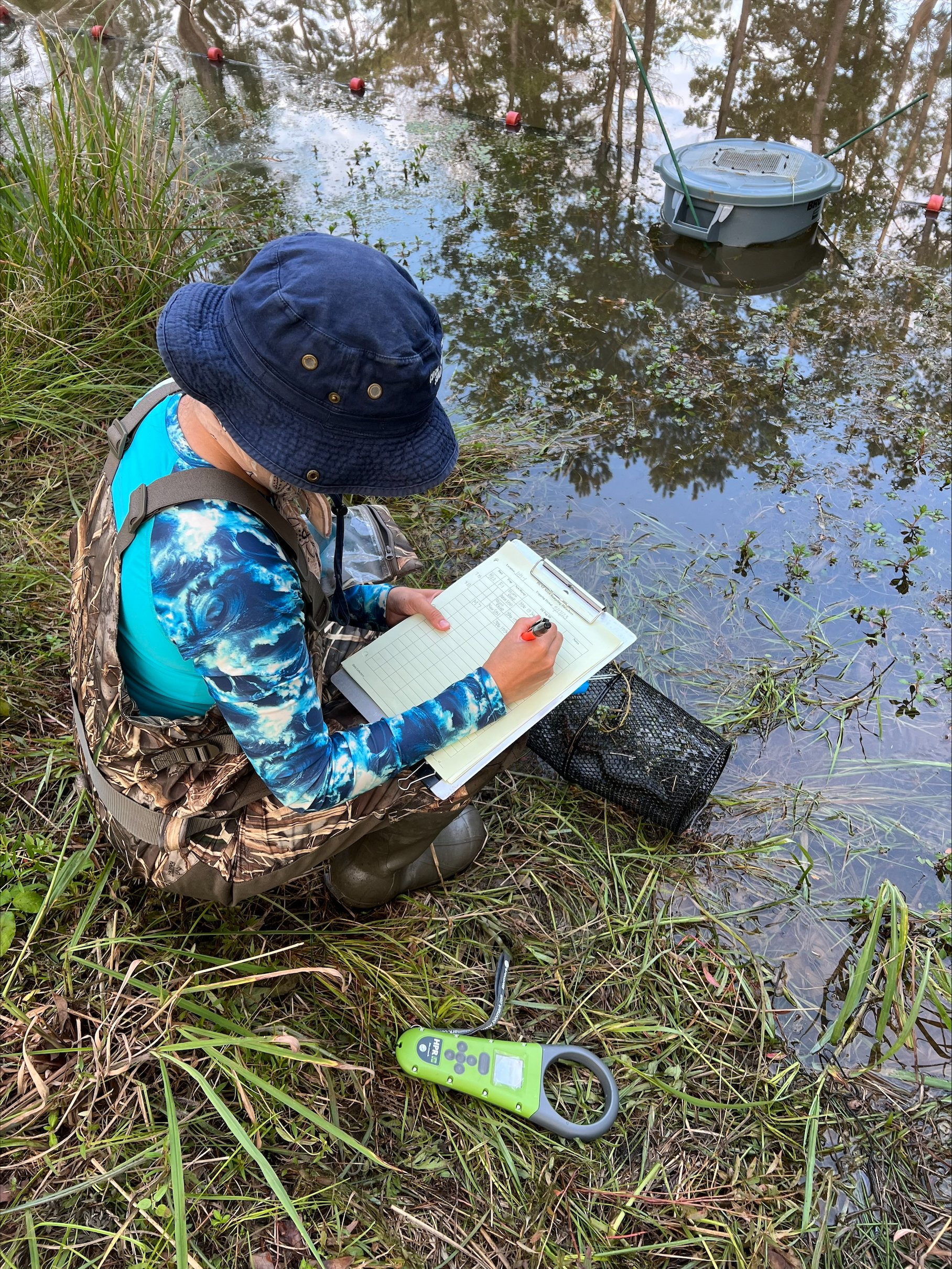
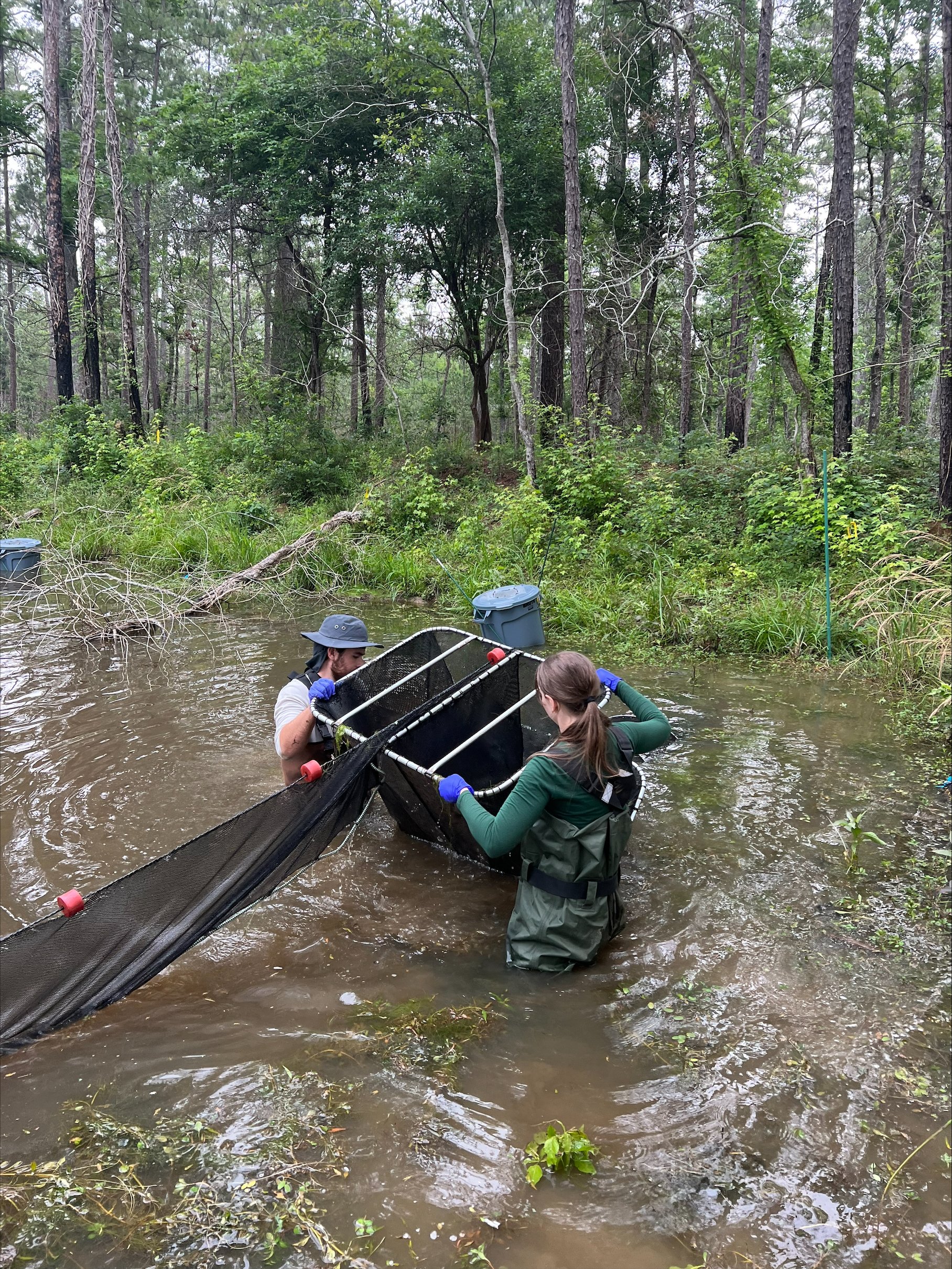
The project will track four populations of juvenile lesser sirens in Eastern Texas within and across years. Sirens’ health is directly affected by their environment through the impacts of resource availability on body condition and growth rates. Furthermore, sirens show strong size-dependent and seasonal shifts in antagonistic behaviors, which lead to acute injuries. This project will use water-borne corticosterone release rates to investigate changes in stress physiology as a function of changes in the environment experienced by the individual (population density, drought severity index, water temperature, pH, conductivity) across time and space to understand coping capacity. This data will also be used to investigate the welfare impact of an established marking technique compared to a novel machine-learning approach.
Grantee: Tom Luhring
Institutions: Wichita State University, Texas State University, and Stephen F. Austin University, United States
Grant amount: $162,604
Grant type: Challenge grants
Focal species: Sirens (Siren intermedia)
Conservation status: Least concern
Disciplines: Herpetology, physiology, climate science
Research location: United States
Project summary
The project will track individual juvenile lesser sirens (Siren intermedia) within and across years for four populations in Eastern Texas. The lack of a terrestrial life-stage and severely limited overland dispersal ability means that hydrologically isolated pools function as closed populations, facilitating recaptures and simplifying demographic estimates. Siren health is directly impacted by the effects of the environment (e.g., drought conditions) through the impacts of resource availability on body condition and growth rates. Furthermore, sirens show strong size-dependent and seasonal shifts in antagonistic behaviors such as biting which lead to acute injuries.
Aquatic amphibians are especially well-suited for the collection of water-borne stress hormones (corticosterone), which offer the least invasive method of evaluating an integrated measure of corticosterone levels that are passively being released through the skin, gills, feces, and urine. This project will use water-borne corticosterone release rates to investigate changes in stress physiology as a function of changes in the environment experienced by the individual (population density, drought severity index, water temperature, pH, conductivity) across time and space to understand coping capacity. These data will also be used to investigate the welfare impact of an established marking technique compared to a novel approach based on pattern recognition by a machine-learning algorithm.
Why we funded this project
Juvenile mortality is especially high in amphibians, and amphibian welfare in general is a neglected subject. This project should provide proof of concept for a cost-effective approach for assessing welfare at both an individual and population level. The waterborne measurements have the potential to integrate corticosterone over a longer period of time, increasing its reliability as a welfare indicator. Finally, this project will test a novel, non-invasive approach to mark-recapture studies, which could facilitate much better individual-level welfare research for amphibians and other (especially aquatic) animals in the future.