

Library
Browse resources published by our research team.
In addition to full texts of our peer-reviewed articles, our library includes research digests that break down our peer-reviewed articles; in-depth reports that thoroughly examine a topic; commentaries that explain the significance of particular issues in wild animal welfare science; and short communications that briefly survey a field or topic.
Wild Animal Initiative adheres to Open Science TOP Guidelines. Read more here.
Bye-bye bycatch: a remotely closing trap for targeted songbird capture
Bonnie Flint, Ben Vernasco
Flint, B. F., & Vernasco, B. J. (2025). Bye-bye bycatch: a remotely closing trap for targeted songbird capture. Journal of Field Ornithology, https://doi.org/10.5751/JFO-00744-960408
Authored by Wild Animal Initiative’s Researcher and Education Specialist, Bonnie Flint, this paper was published in the December 2025 issue of the Journal of Field Ornithology.
About the paper
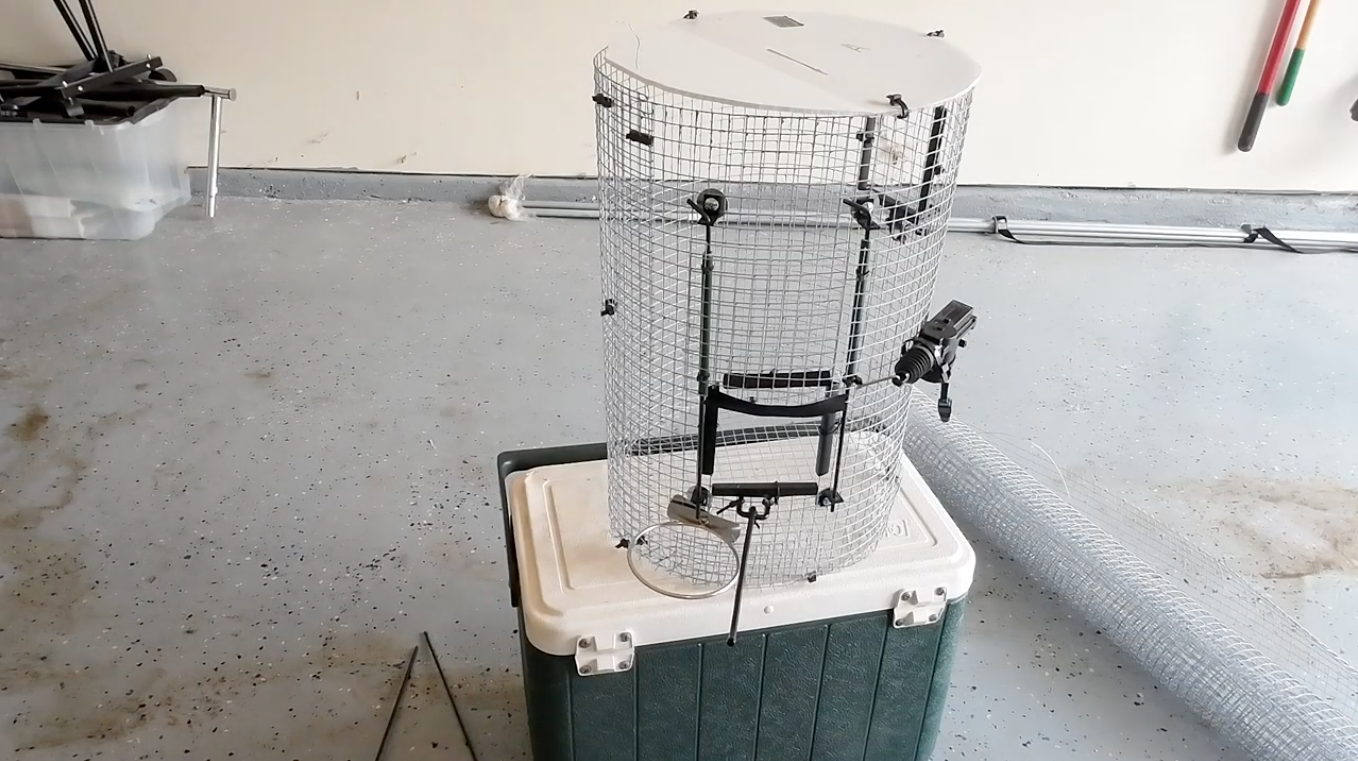
This remotely closing bird trap was designed as part of our house sparrow research project, which aims to validate indicators of welfare in house sparrows and examine how varying environmental conditions affect their welfare.
Capturing and marking animals is often an essential component of studying wild populations, but the process of capturing and marking can have detrimental effects on captured birds. For instance, research projects are often focused on one or a few species, yet many other, non-target species can be inadvertently captured. Bycatch (non-target animals that are captured during the process of capturing target animals) is a frequent problem in ornithological research projects using non-selective capture methods such as mist nets, Potter traps, or other passive, baited traps. These non-target individuals likely suffer negative welfare implications from being caught (with potential effects on their health and fitness), and researchers may waste valuable time and resources processing bycatch for release when they could be focusing on capturing and collecting data from target species. To remedy this problem, we introduce here a relatively simple trap design that installs on a bird feeder and traps birds using a wireless, remotely closing door to allow selective capture of birds visiting a feeding station, a common capturing context in ornithological studies. We describe how to construct the selective, remotely closing trap and report our experience using the traps to selectively capture house sparrows (Passer domesticus) in comparison to mist nets. This easy-to-use trap will benefit researchers looking to effectively and efficiently capture target species while also decreasing bycatch and will be especially convenient at established bird feeding stations.
This is the first in a series of papers that we expect to result from the house sparrow project. Future papers resulting from the project will focus directly on indicator validation and house sparrow welfare.
Visit our blog to read about our progress on the house sparrow project:
Research sense: Incorporating animals’ sensory capacities in animal care and study design
Mal Graham, Bob Fischer
Graham M., Fischer B. (2026). Research sense: Incorporating animals’ sensory capacities in animal care and study design. Laboratory Animals. 2026;60(2):220-224. https://doi.org/10.1177/00236772251385784. (First published online December 14, 2025.)
Co-authored by Wild Animal Initiative Strategy Director Mal Graham, this paper was first published online in Laboratory Animals in December 2025.
Abstract
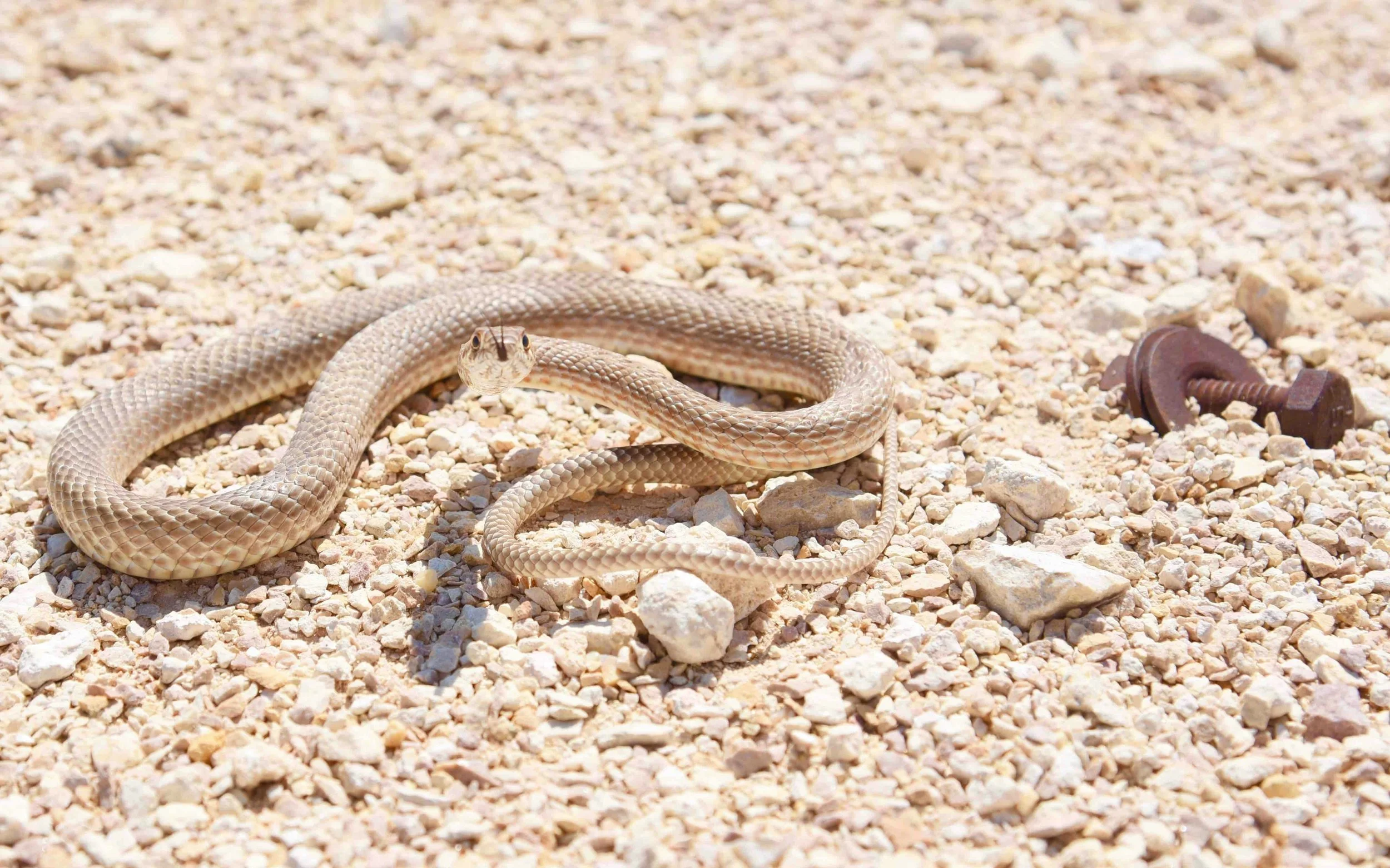
No systematic procedures exist to ensure that differences in animal sensory capacities are accounted for in experimental design and ethical review processes. This oversight can compromise both scientific validity and animal welfare. This review presents three practical methodologies to address this gap: incorporation of specialist expertise through consultation frameworks, voluntary certification schemes modeled on Open Science practices, and mandatory sensory capacity review integrated into existing ethics committee processes. We provide a concrete tool — a sensory modality survey — that can be implemented by institutional review committees to evaluate sensory considerations in research proposals systematically. These approaches align with the 3Rs principles by enhancing experimental refinement and potentially reducing animal use through improved study design.
Rehabilitating wild animal welfare: A focus on veterinary rescue and rehabilitation interventions
Beaulieu, M. (2025). Rehabilitating wild animal welfare: A focus on veterinary rescue and rehabilitation interventions. Research in Veterinary Science, https://doi.org/10.1016/j.rvsc.2025.105582
Authored by Wild Animal Initiative’s Research Manager, Michaël Beaulieu, this paper was published in the April 2025 issue of Research in Veterinary Science.
Abstract
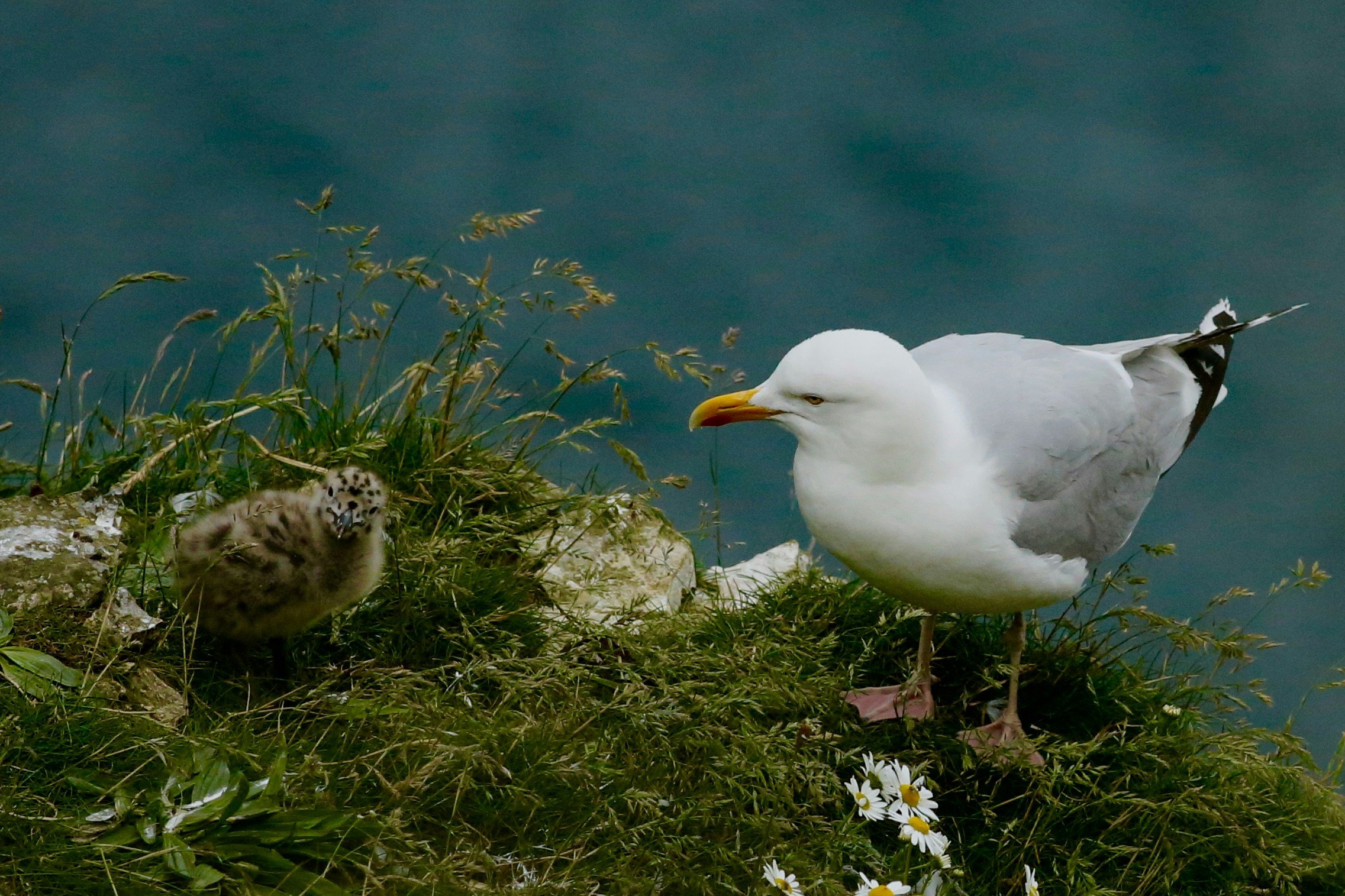
Conservation considerations are often put forward to justify wildlife veterinary interventions.
Paradoxically, the conservation impact of such interventions is often uncertain.
These interventions, however, have a clear impact on the welfare of wild animals.
This confusion is likely related to the connection between animal conservation and welfare.
Veterinarians need to explicitly recognize the welfare value of their interventions on wildlife.
What is the value of wild animal welfare for restoration ecology?
Jane F. Capozzelli, Luke Hecht, Samniqueka Halsey
Capozzelli, J. F., Hecht, L., & Halsey, S. (2020). What is the value of wild animal welfare for restoration ecology? Restoration Ecology, https://doi.org/10.1111/rec.13114
Authored by former Wild Animal Initiative Staff Researcher Jane Capozzelli, Wild Animal Initiative Science Director Luke Hecht, and Samniqueka Halsey, Assistant Professor in the College of Agriculture, Food and Natural Resources at the University of Missouri, this paper was published in March 2020 in Restoration Ecology.

Abstract
The restoration community continues to discuss what constitutes good environmental stewardship. One area of tension is the extent to which the well-being of wild animals should inform restoration efforts. We discuss three ways that the perspective of wild animal welfare can augment restoration ecology: strengthening people's relationship with nature, reinforcing biotic integrity, and reducing mechanistic uncertainty. The animal welfare movement elevates sentient animals as stakeholders and explores how environmental context directly impacts the well-being of individuals. Viewing wild animals through this lens may encourage people to think and act with empathy and altruism. Second, we incorporate animal welfare into the concept of biotic integrity for ecological and ethical reasons. Restoring ecosystem processes may enhance animal welfare, and vice versa. Alternatively, there may be a trade-off between these factors, requiring local decision-makers to prioritize between restoring ecosystem function and promoting individuals' well-being. We conclude by discussing how welfare can impact population recovery, thereby adding insights about mechanisms underpinning restoration objectives. Ultimately, restoration ecologists and proponents of wild animal welfare could enjoy a productive union.
Summary of “What is the value of wild animal welfare for restoration ecology?”
Jane Capozzelli, Luke Hecht, Dr. Samniqueka Halsey
This post summarizes a 2020 perspective piece by Jane Capozzelli, Luke Hecht, and collaborator Samniqueka Halsey, in which they explore the potential for synergy between restoration ecology and wild animal welfare research.
Written by: Jane Capozzelli, Luke Hecht, Samniqueka Halsey
Published: March 2, 2020
This piece was published in the March 2020 issue of Restoration Ecology.
Why discuss wild animal welfare in restoration ecology?
Research and outreach disrupts status quo narratives, such as the perception that wild animal welfare and environmental management must operate under mutually-exclusive values, metrics, or models. Writing peer-reviewed articles in environmental science journals builds a common academic language to address environmental problems. It also catalyzes interdisciplinary thinking by considering pluralistic, alternative ethics of environmental stewardship. These two steps both bring us closer to generating solutions for improving the lives of wild animals.
Our overall thinking is that proponents of wild animal welfare and restoration ecology share, to some extent, a non-anthropocentric worldview and a desire to collaborate to help wild animals. Yet the virtues and consequences of “respect and responsibility for wild animals” are viewed through a different lens by ecologists and proponents of wild animal welfare.
The research in a nutshell
To build common ground toward solutions for improving the lives of wild animals, we provided a window into the animal welfare community for restoration ecologists, particularly wild animal welfare’s ethical positions and research priorities. We also acknowledged that people may differentially prioritize welfare- and conservation-oriented objectives. Yet, wild animal welfare is relevant, regardless, because of the instrumental value of providing for the needs of individual animals.
To further frame our argument around animal ethics and morality, we blended our instrumental arguments around the moral foundations of conservation ethics, established in Aldo Leopold’s land ethic. We highlighted that the land ethic includes moral concern for individual, “fellow-members” of the landscape. Despite the value the land ethic places on animals, the management community has not resolved how to support individual animals while maintaining their ecosystem. It also does not sufficiently account for diverse ethical perspectives regarding what constitutes good environmental stewardship, nor take advantage of the information-value of animal welfare, as animal well-being depends on a host of behavioral, physiological, and environmental factors.
Key takeaways
Our manuscript illustrates three ways that the perspective of wild animal welfare augments restoration ecology.
Strengthening relationships between people and nonhuman animals. Restoration ecology could engage with wild animal welfare to advance a human-nature relationship infused with empathy and altruism.
Supporting multidimensional ecosystem health. It is possible to simultaneously improve ecosystem function and animals’ well-being. Synergistic interventions would concurrently support individuals and ecosystems, with the added benefit of encompassing multiple ethical and moral stances regarding what is good environmental stewardship.
Reducing uncertainty about interventions. Several aspects of animal welfare, such as health, physiology, behavior, and cognition, can modify species, communities, and ecosystems. A greater understanding of these relationships can reduce uncertainty regarding the outcomes of interventions for wildlife collectives or individuals.
Next steps
An essential challenge ties together proponents of environmental management and wild animal welfare: resolving ethical and ecological conflicts on an increasingly complex and interconnected planet. The challenge for the wild animal welfare movement is to illustrate the ways that wild animal welfare is important and viable. Future work on these topics continues at Wild Animal Initiative to reorient animal advocacy and environmental science with a view of wild animals as morally-relevant subjects, who are entitled to a good life, and to catalyze evidence-based solutions for modern environmental problems on behalf of wild animals.