

Meet our grantees
Wild Animal Initiative funds academic research on high-priority questions in wild animal welfare.
The goal of our grants program is to fund research that deepens scientific knowledge of the welfare of wild animals in order to better understand how to improve the welfare of as many wild animals as possible, regardless of what causes the threats to their well-being.
We showcase our grantees and their projects here and continuously update this page as new projects are added.
Developing an automated cognitive bias task for wild squirrels
Grantees: Vikki Neville, Lisa Leaver
Institutions: University of Bristol, University of Exeter
Project summary
The goal of this project is to develop a cognitive judgment bias test for use in wild gray squirrels that capitalizes on their innate behavior, avoiding the need for the extensive type of training that is usually part of cognitive judgment bias tests in captive settings. By making use of the widely available Raspberry Pi platform, the test should be relatively easy for other researchers to replicate and adapt for use in other species. To validate the test itself, the research team will also assess how measurement of cognitive judgment bias varies with factors assumed to affect the valence of animals participating in the test, such as distance from cover and levels of food provisioning in the environment, as well as how the test results correlate with other potential non-invasive behavioral and physiological indicators of welfare, such as the distance at which a squirrel flees from approaching humans, hair cortisol concentration, and real-time fluctuations in eye temperature in response to stimuli during the the test.
Grantees: Vikki Neville and Lisa Leaver
Institutions: University of Bristol, University of Exeter, United Kingdom
Project start date: May 2024
Grant amount: $157,049
Grant type: Challenge grant
Focal species: Grey squirrel (Sciurus carolinensis)
Conservation status: Least concern
Disciplines: Animal welfare science, physiology, animal behavior
Research location: United Kingdom
Project summary
The development of the cognitive judgment bias (CJB) task for non-human animals revolutionised the field of animal welfare. The CJB task: (a) is thought to measure both relatively better and relatively poorer welfare across the full spectrum of possible welfare states, (b) is non-invasive, and (c) has been validated using a meta-analytic approach. Moreover, the theoretical basis of the predictions for the CJB task should be applicable across taxa and, accordingly, it has been used successfully in many species. However, to date, its use has largely been in captive species and there are a dearth of examples in wild animals. A key barrier to implementation is that it is difficult to train animals to associate stimuli with particular outcomes: the time needed to do so makes these studies unsuccessful or infeasible in non-captive populations of animals. We propose that this could be overcome by capitalising on the natural behaviour of a species to reduce training time and by using equipment that allows automation of stimulus presentation and data collection.
The main aim of our proposed project is to develop a CJB task for use in wild animals, in particular wild squirrels. Our key objectives are to develop a task for collecting CJB data from grey squirrels which: (1) capitalises on their innate behaviour, obviating the need for extensive training, and (2) makes use of Raspberry Pi equipment so that the task can be easily implemented by other researchers and straightforwardly adapted for use across species to measure welfare and validate novel potential measures of welfare.
To assess that our task works as anticipated, secondary objectives will be to: (1) assess how CJB varies with task manipulations designed to alter affective valence (the distance of the equipment from cover, and levels of food provisioning in the environment), and (2) assess how CJB correlates with other potential non-invasive indicators of welfare (e.g. flight distance in response to humans, QBA scores, retrapability, social status, hair cortisol concentration, and fluctuations in eye temperature following positive and negative stimuli on the judgement bias test measured using infrared thermal cameras).
Why we funded this project
As noted above, cognitive bias tests are generally considered to be exceptionally robust welfare indicators, while gray squirrels are an abundant species and a prime target for near-term interventions. Therefore, we are excited to support the development of a cognitive judgment bias test for use on free-living gray squirrels, which will also help to assess the validity of simpler indicators, such as eye temperature and flight initiation distance.
Validating the use of cognitive bias to assess affective valence in wild bird populations.
Grantee: Oliver Burman
Institution: University of Lincoln
Project summary
The goal of this project is to develop and validate a cognitive bias test for assessing the welfare of woodland birds that does not require any training stage, and instead takes advantage of innate attraction and aversion to stimuli that resemble preferred or noxious prey (with a range of likeness accuracy, based on the principle of imperfect Batesian mimicry). Continuing the theme of exploiting natural variation, the project will use spatial variation in numerous components of habitat preferability that can be assumed to directionally affect welfare — such as food abundance and shelter — as natural experiments to validate their cognitive bias tests.
Grantees: Oliver Burman
Institutions: University of Lincoln, United Kingdom
Project start date: October 2024
Grant amount: $193,684.17
Grant type: Challenge grant
Focal species: Free-living wild birds, including (but not limited to): blue tits (Cyanistes caeruleus), great tits (Parus major), wrens (Troglodytes troglodytes), coal tits (Poecile ater), European robins (Erithacus rubecula), chaffinches (Fringilla coelebs), greenfinches (Chloris chloris), starlings (Sturnus vulgaris), blackbirds (Turdus merula) and Eurasian jays (Garrulus glandarius).
Conservation status: Least concern
Disciplines: Animal welfare science, ornithology, animal behavior
Research location: United Kingdom
Project summary
Cognitive bias is a robust and validated measure of affective valence effective in a wide variety of animal species. However, this valuable approach has been primarily focused on the welfare assessment of captive animals and has not yet been demonstrated in wild free-living animal populations. This goal is crucial for addressing urgent contemporary issues such as the impact of anthropogenic and climatic change on wild animal welfare and to tackle key conservation challenges. In the first attempt to apply a cognitive judgement bias task in a free-living wild animal population, we found that wild birds struggled to complete the necessary training (discrimination) stage of the cognitive bias task. In the proposed project, our aim is therefore to validate two novel cognitive approaches to assessing affective valence in wild animals that do not require training, in conjunction with established behavioural and physiological indicators of welfare. Firstly, we will investigate a modified cognitive judgement bias task based on the innate avoidance of naturally occurring aversive prey, using the principle of imperfect Batesian mimicry. Secondly, we will modify and validate a cognitive attention bias task that relies on a spontaneous response to a potential threat. Both tasks will be assessed in populations of wild birds using natural variation in affective valence. Our anticipated outcomes are the development of an effective, validated measure of affective valence applicable to wild birds without the need for capture/restraint that can be translated across species; an invaluable tool in the assessment of wild animal welfare in response to a wide variety of environmental challenges.
Why we funded this project
This project’s results are intended to be generalizable to numerous woodland bird species (e.g., tits, wrens, starlings). We also appreciate its creatively humane approach to validation, using innate preferences and natural variation in affective valence, rather than training and experimental manipulation. Plus, the project considers both presumably positive (e.g., food, shelter) and presumably negative (e.g., predator abundance) welfare factors, which further strengthens the validation.
Predicting density dependence of welfare of wild animal populations based on resource access linked to habitat availability and usage
Grantee: Ross MacLeod
Institution: Liverpool John Moores University
Project summary
This project seeks to adapt a habitat and population model to incorporate welfare and apply it to the study of an abundant and widespread avian species, the house sparrow (Passer domesticus). The researchers propose to utilize a variety of welfare metrics to validate model assumptions, which will then allow them to test assumptions related to the welfare implications of density-dependent population dynamics.
Grantee: Ross MacLeod
Institutions: Liverpool John Moores University, United Kingdom
Project start date: August 2023
Grant amount: $159,744
Grant type: Challenge grants
Focal species: House sparrow (Passer domesticus)
Conservation status: Least concern
Disciplines: Ecological modeling, population ecology, animal welfare science
Research location: United Kingdom
Project summary
This project seeks to adapt a habitat and population model to incorporate welfare and apply it to the study of an abundant and widespread avian species, the house sparrow (Passer domesticus). The researchers propose to utilize a variety of welfare metrics to validate model assumptions, which will then allow them to test assumptions related to the welfare implications of density-dependent population dynamics.
Why we funded this project
We funded this project because it addresses our proposal request very closely and proposes to investigate a key wild animal welfare question using a modeling framework. They are also planning to address their question using an abundant avian species. The project has high potential to inform future work focused on modeling total welfare in a population (i.e., combining both individual welfare and population size), and to create a model that can be replicated in other systems.
Find Ross’ other project, studying wild birds, here.
Photos


Empirical assessment of welfare in wild American mink and Eurasian otters: the effects of intra- and inter-specific population density
Grantees: Lauren A Harrington, Maria Diez Leon
Institution: Oxford University
Project summary
This project seeks to determine whether the welfare of American mink is negatively impacted in the presence of high densities of Eurasian otters, whether both species’ welfare is compromised at relatively higher densities of conspecifics, and whether there is a seasonality to welfare impacts. The project will also assess whether behavioral time budget shifts in mink are associated with higher chronic stress levels as a proxy for negative impact on mink welfare. These questions will be addressed by measuring welfare through several different domains, including behavioral (exploratory behavior, vocalizations), physical (body condition, ectoparasite load), and physiological (telomere length, fecal glucocorticoid metabolites and hair cortisol) metrics.
Grantees: Lauren A. Harrington, Maria Diez Leon
Institutions: Oxford University, United Kingdom
Project start date: August 2023
Grant amount: $162,257
Grant type: Challenge grants
Focal species: American mink (Neovison vison), Eurasian otter (Lutra lutra)
Conservation status: Near threatened
Disciplines: Animal welfare science, community ecology, wildlife management
Research location: United Kingdom
Project summary
This project seeks to determine whether the welfare of American mink (Neovison vison) is negatively impacted in the presence of high densities of Eurasian otters (Lutra lutra), whether both species’ welfare is compromised at relatively higher densities of conspecifics, and whether there is a seasonality to welfare impacts. The project will also assess whether behavioral time budget shifts in mink are associated with higher chronic stress levels, as a proxy for negative impact on mink welfare. These questions will be addressed by measuring welfare through several different domains, including behavioral (exploratory behavior, vocalizations), physical (body condition, ectoparasite load), and physiological (telomere length, fecal glucocorticoid metabolites and hair cortisol) metrics.
Why we funded this project
This project has the potential to contribute significant information to the understanding of intra-specific density-dependent welfare and to the understanding of network effects among predator-prey and competitor interactions of wild animals. Its unusually diverse set of welfare metrics will allow for cross-validation, strengthening both this project and other projects applying the same metrics. The investigators each have a strong background in animal welfare and have made efforts to better align their work with Wild Animal Initiative’s priorities for wild animal welfare, which makes them good candidates to carry forward the validation of these welfare indicators (particularly telomere attrition, which is still relatively immature in its use as a welfare indicator).
Find Maria’s other project, studying European minks, here.
Photos

Social connections and their welfare implications in the wild
Grantee: Alex Thornton
Institutions: University of Exeter, University of Bristol
Project summary
This project seeks to understand the relationship between welfare and social interactions in wild bird populations. Using historical data, the researchers will also seek insight into how welfare varies among individuals in relation to the social system, early-life experiences, and interactions among individuals. They will also investigate whether social systems might play a role in helping to mitigate some of the negative anthropogenic impacts on welfare.
Grantee: Alex Thornton
Institutions: University of Exeter, University of Bristol, United Kingdom
Project start date: September 2023
Grant amount: $157,962
Grant type: Challenge grants
Focal species: Jackdaws (Coloeus sp.)
Conservation status: Least concern
Disciplines: Animal behavior, ornithology, animal welfare science
Research location: United Kingdom
Publications
Hahn, L. G., McDowall, J., Vanhussel, M., Mendl, M., & Thornton, A. (2026). Social information about others' affective states in a human-altered world. Journal of Animal Ecology, 00, 1–15. https://doi.org/10.1111/1365-2656.70208
Project summary
This project seeks to understand the relationship between welfare and social interactions in wild bird populations. Using historical data, the researchers will also seek insight into how welfare varies among individuals in relation to the social system, early-life experiences, and interactions among individuals. They will also investigate whether social systems might play a role in helping to mitigate some of the negative anthropogenic impacts on welfare.
Why we funded this project
We funded this project because it addresses a fundamental question important for understanding wild animal welfare: how welfare relates to social interactions. The project could provide valuable insights into positive welfare and which interventions might be possible to enhance positive experiences in the wild. The project could provide data to accelerate the development of interventions to promote positive welfare in wild animals, possibly resulting in viable near-term interventions. The researchers will also use diverse metrics to assess welfare, and as such, the project also offers the potential to advance the measurement of welfare.
Photos

Development of novel measures of welfare in juvenile European starlings exposed to nutritional stress
Grantee: Melissa Bateson
Institution: Newcastle University
Project summary
Nutritional stress causes massive mortality in juvenile European starlings and has lifetime welfare consequences for survivors. The aim of this project is to identify the metabolic “fingerprint” of nutritional stress in starling nestlings and to validate molecular biomarkers that can be used to assess the welfare of wild starlings. This project will use untargeted metabolomics to identify multiple novel biomarkers of exposure to nutritional stress. This “fingerprint” will be validated by testing whether it predicts gold-standard behavioral measures of adult affective experience in a cohort of laboratory-raised birds. The aim will be to identify an applicable panel of metabolites that can be measured from feathers and guano.
Grantee: Melissa Bateson
Institution: Newcastle University, United Kingdom
Project start date: September 2022
Grant amount: $60,000
Grant type: Challenge grants
Focal species: Starlings (Sturnidae sp.)
Conservation status: Least concern
Disciplines: Physiology, ornithology
Research location: United Kingdom
Project summary
Juveniles of passerine species such as the European starling (Sturnus vulgaris) experience massive mortality, much of which is caused by direct or indirect effects of nutritional stress. Of birds that survive, many will bear the “scars” of early-life stress that have consequences for their welfare. The aim of this project is to identify the metabolic “fingerprint” of nutritional stress in starling nestlings and to validate sensitive and non-invasive molecular biomarkers that can be used to assess the welfare of wild starlings.
This group has been developing the hypothesis that biomarkers of biological age not only predict future morbidity and mortality, but also reflect the quality of an animal’s cumulative lifetime experience. Existing metrics of biological age, particularly telomere length, require invasive blood samples, and measurements are imprecise, meaning that large sample sizes are currently required to obtain significant effects in epidemiological studies. Estimating biological age based on measuring multiple age-related biomarkers (as is typical in the human aging literature) is likely to be more reliable than using telomere length alone.
This project will use untargeted metabolomics to identify multiple novel biomarkers of exposure to nutritional stress in nestling starlings. This “fingerprint” will be validated by testing whether it predicts gold-standard behavioral measures of adult affective experience in a cohort of laboratory-raised birds. Metabolomics measures thousands of small molecules in one biological sample and can be performed on a range of tissues including blood, hair, and urine. The aim will be to identify an applicable panel of metabolites that can be measured cheaply and easily from feathers and the uric acid component of guano.
Why we funded this project
This project should introduce a novel indicator of long-term welfare that is less invasive, requires fewer resources, and is potentially more reliable than similar existing methods. The PI is a world leader in the field of animal behavior and is the main originator of using biological aging to understand long-term animal welfare, especially in non-model species. For that reason, we are especially confident in this work being high-quality and having great academic reach and influence.
Photos

Integrating individual-level juvenile welfare in dynamic habitats across time and space
Grantee: Tom Luhring
Institution: Wichita State University, Texas State University, and Stephen F. Austin University
Project summary
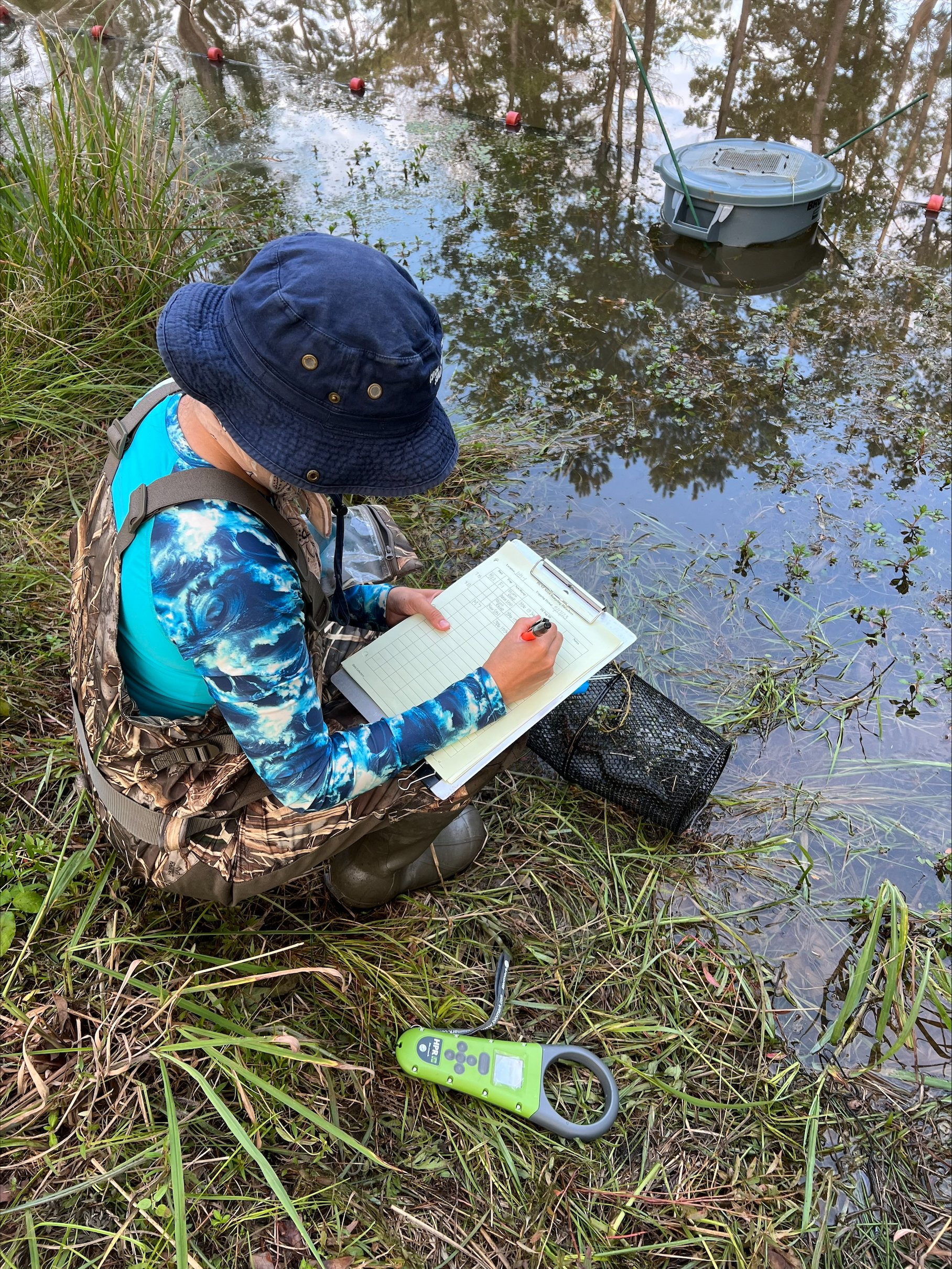
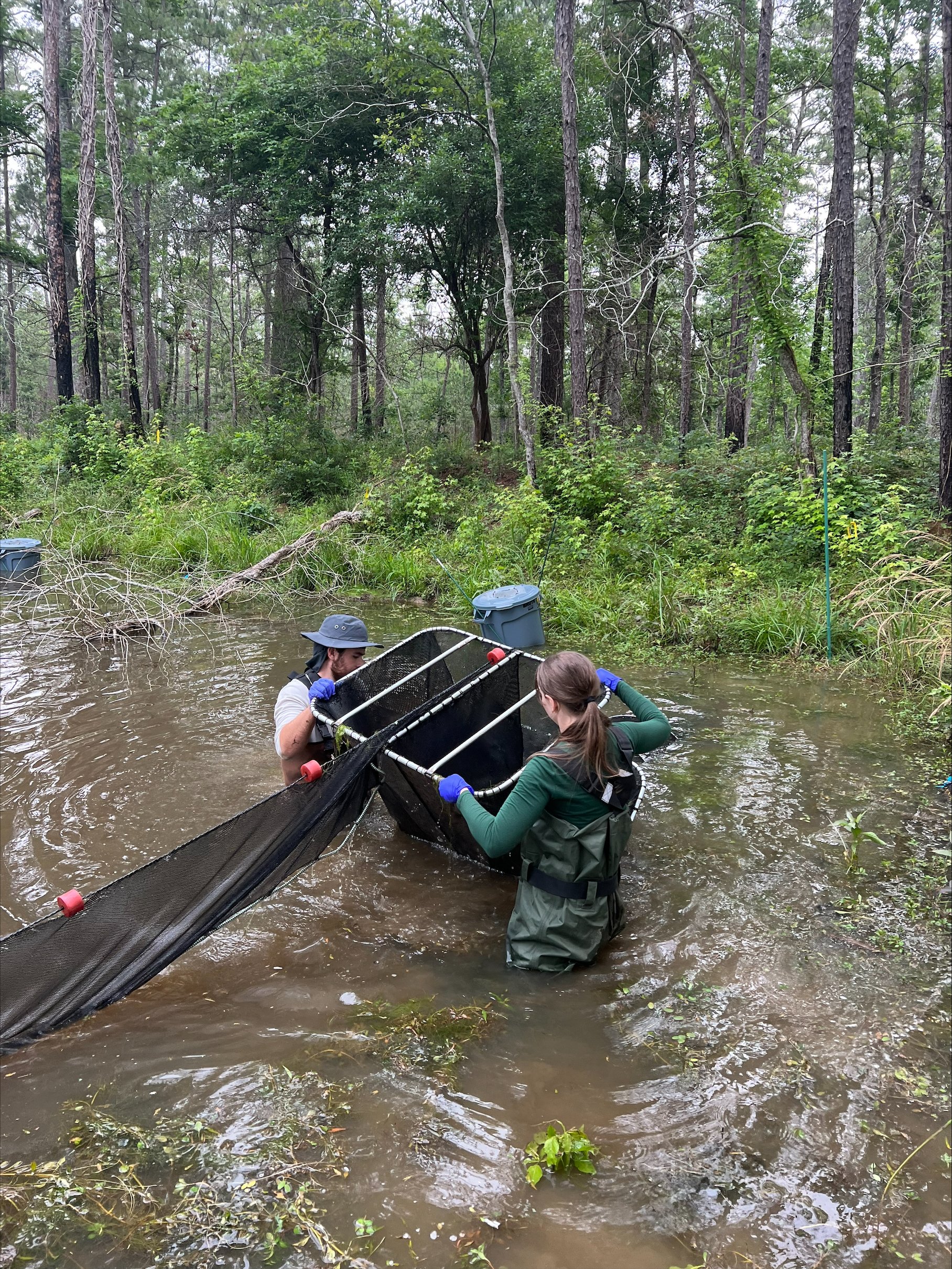
The project will track four populations of juvenile lesser sirens in Eastern Texas within and across years. Sirens’ health is directly affected by their environment through the impacts of resource availability on body condition and growth rates. Furthermore, sirens show strong size-dependent and seasonal shifts in antagonistic behaviors, which lead to acute injuries. This project will use water-borne corticosterone release rates to investigate changes in stress physiology as a function of changes in the environment experienced by the individual (population density, drought severity index, water temperature, pH, conductivity) across time and space to understand coping capacity. This data will also be used to investigate the welfare impact of an established marking technique compared to a novel machine-learning approach.
Grantee: Tom Luhring
Institutions: Wichita State University, Texas State University, and Stephen F. Austin University, United States
Project start date: October 2022
Grant amount: $162,604
Grant type: Challenge grants
Focal species: Sirens (Siren intermedia)
Conservation status: Least concern
Disciplines: Herpetology, physiology, climate science
Research location: United States
Project summary
The project will track individual juvenile lesser sirens (Siren intermedia) within and across years for four populations in Eastern Texas. The lack of a terrestrial life-stage and severely limited overland dispersal ability means that hydrologically isolated pools function as closed populations, facilitating recaptures and simplifying demographic estimates. Siren health is directly impacted by the effects of the environment (e.g., drought conditions) through the impacts of resource availability on body condition and growth rates. Furthermore, sirens show strong size-dependent and seasonal shifts in antagonistic behaviors such as biting which lead to acute injuries.
Aquatic amphibians are especially well-suited for the collection of water-borne stress hormones (corticosterone), which offer the least invasive method of evaluating an integrated measure of corticosterone levels that are passively being released through the skin, gills, feces, and urine. This project will use water-borne corticosterone release rates to investigate changes in stress physiology as a function of changes in the environment experienced by the individual (population density, drought severity index, water temperature, pH, conductivity) across time and space to understand coping capacity. These data will also be used to investigate the welfare impact of an established marking technique compared to a novel approach based on pattern recognition by a machine-learning algorithm.
Why we funded this project
Juvenile mortality is especially high in amphibians, and amphibian welfare in general is a neglected subject. This project should provide proof of concept for a cost-effective approach for assessing welfare at both an individual and population level. The waterborne measurements have the potential to integrate corticosterone over a longer period of time, increasing its reliability as a welfare indicator. Finally, this project will test a novel, non-invasive approach to mark-recapture studies, which could facilitate much better individual-level welfare research for amphibians and other (especially aquatic) animals in the future.
Photos

Development of octopus mind in the wild: a behavioral, ecological and evolutionary investigation into sentience and emotional states in Octopus insularis juveniles
Grantee: Michaella Andrade
Institution: Federal University of ABC
Project summary
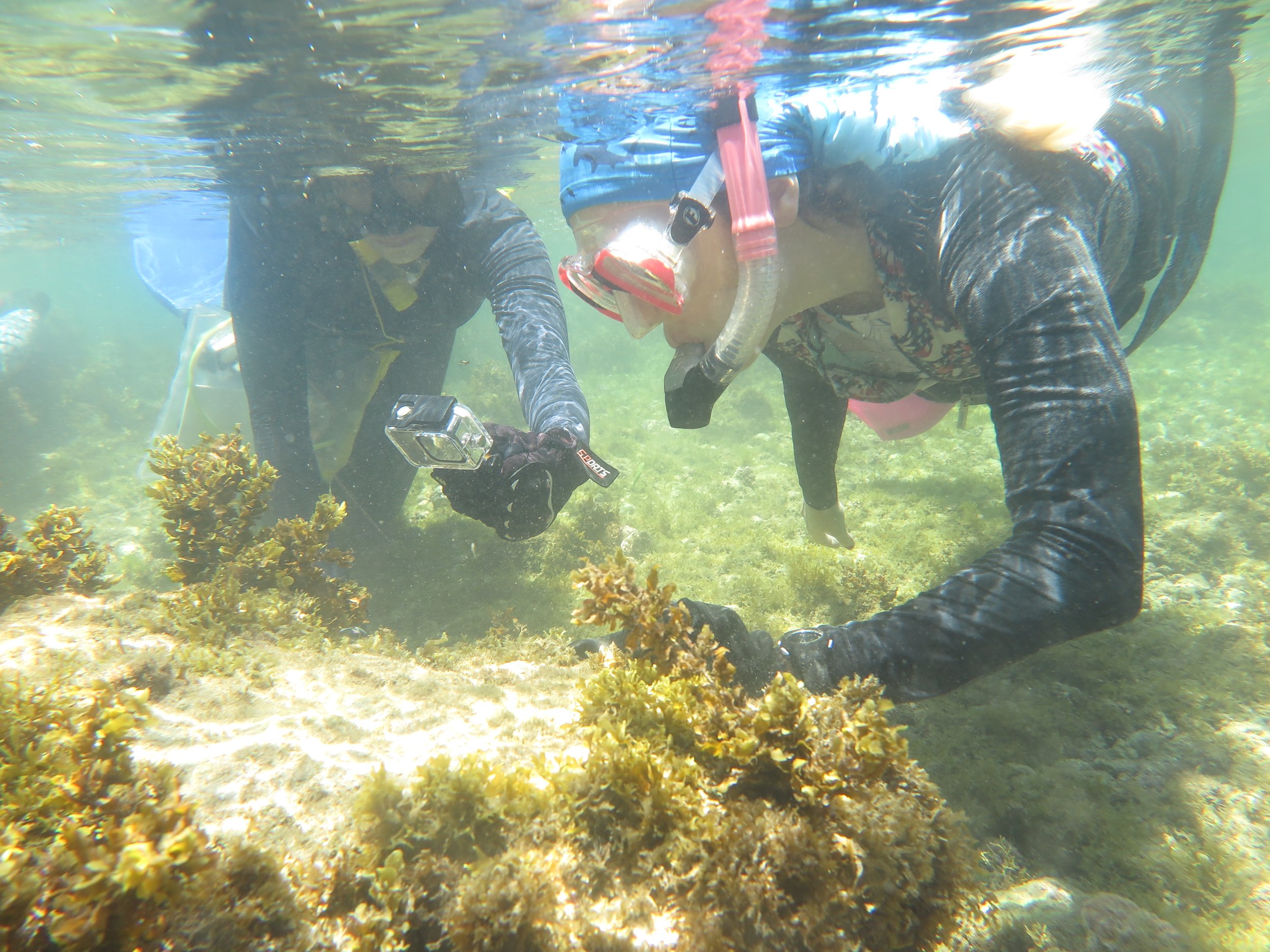
There is evidence that evolutionary pressures can cause behaviors with opposite meanings to develop opposite forms, the way a frown is the opposite of a smile. One way to understand the expression of emotion in animals may therefore be to identify pairs of behaviors that are opposites. In octopuses, which are increasingly being recognized as sentient, colors can be signals of emotional valence during conflict and other situations. Yet no study has tested whether octopuses have opposite pairs of color signals. This project will produce descriptions of evolutionary and behavioral patterns that reflect the emotional states and sentience of juvenile octopuses, which may contribute to the welfare of octopuses and other invertebrates.
Grantee: Michaella Andrade
Institution: Federal University of ABC, Brazil
Project start date: April 2022
Grant amount: $37,959
Grant type: Challenge grants
Focal species: Octopuses (Octopoda sp.)
Conservation status: Data deficient
Disciplines: Sentience, animal behavior
Research location: Brazil
Publications
Andrade M.P., et al. (2023). Assessing Negative Welfare Measures for Wild Invertebrates: The Case for Octopuses. Animals, 13(19), 3021. https://doi.org/10.3390/ani13193021
Project summary
Welfare refers to the quality of life of animals that possess sentient capacity and emotional states. Although the precursors of sentience were possibly present on the planet as early as 890 million years ago, the evolution of sentience is still poorly understood. However, cephalopods are increasingly being recognized as sentient, yet we do not know about this phenomenon in juvenile wild animals. In this sense, studies with wild animals can be beneficial for finding a wider range of ecological triggers and their relationship with behaviors.
There’s evidence that evolutionary pressures can cause behaviors with opposite meanings to eventually develop opposite forms, the way a frown is the opposite of a smile. One way to understand the expression of emotion in animals therefore may be to find pairs of behaviors that are opposites. In octopus, colors can be a signal of emotional valence during conflict and other contexts. Although researchers began to see this dimension in octopuses, no study has tested whether opposite pairs of color signals are present in octopuses. This project will produce descriptions of evolutionary and behavioral patterns that reflect the emotional states and sentience for juvenile octopuses, which may contribute to the welfare of octopuses and other invertebrates.
Why we funded this project
Although octopuses are widely assumed to be sentient at the adult stage, no studies that we are aware of have examined sentience at earlier life stages. As the vast majority of octopuses alive at any one time are juveniles, and octopuses have enormously high juvenile mortality, the question of when in their development sentience arises is particularly important. This project is also interesting because it will teach us about what the lives of juvenile octopuses are like and the extent to which welfare effects are mediated by personality traits.
Photos


Evaluating short- and long-term impacts of injury and illness on wild bird welfare
Grantee: Katie LaBarbera
Institution: San Francisco Bay Bird Observatory
Project summary
Surprisingly little is known about how illness and injury impact the welfare and survival of wild animals, as detecting and assessing injuries and tracking animals to determine their fates is challenging. Yet bird banding stations and wildlife rescues require this information to decide whether birds can be ethically released with long-term impairments. This project will use the San Francisco Bay Bird Observatory (SFBBO)’s long-term bird-banding dataset, which spans over 30 years and 100,000 captures, to investigate these questions in wild birds. Bird banding involves close examination of wild individuals who are frequently recaptured over time. With a high rate of recapture, the SFBBO tracks individuals over years, monitoring their injuries and health, and estimating survival.
Grantee: Katie LaBarbera
Institution: San Francisco Bay Bird Observatory, United States
Project start date: March 2022
Grant amount: $20,000
Grant type: Challenge grants
Focal species: Wild birds
Conservation status: Least concern
Disciplines: Wildlife rehabilitation, ornithology
Research location: United States
Project summary
There is surprisingly little known about how illness and injury impact the experience of wild animals. Studying such patterns can be limited by the challenges of detecting and assessing injuries and then following up to determine individual fate in wild animals. The San Francisco Bay Bird Observatory’s (SFBBO) long-term bird-banding dataset (>30 years and >100,000 captures) is well-suited to address these questions in wild birds.
Bird banding involves close examination of wild individuals, and individuals are frequently recaptured over time. The SFBBO has a high rate of recapture, which allows them to track individuals over years and to estimate survival, tracking the state of injuries and bird health over multiple years. Understanding how injury impacts individual welfare and survival is of both intellectual and practical value. Bird banding stations vary considerably in their criteria for deciding whether an injured bird should be released or taken to a wildlife rescue. Wildlife rescues must in turn decide whether birds can be ethically released with long-term impairments; for example, many rescues will euthanize rather than release one-legged songbirds. Banding stations and wildlife rescues need real data on wild birds' experiences and prognoses to inform such policies; otherwise, they risk enacting harm.
Why we funded this project
With thousands of wild animal rehabilitation centers in the US alone, this study could provide information that would allow wild animal rehab staff to make data-driven decisions about their bird patients. We think there may be potential to greatly grow interest in the wild animal welfare community via connections with wild animal rehabilitation groups, and this project could provide connections to that community. The project also advances one of our core goals — understanding what wild animals’ lives are like — using an existing and humanely acquired dataset, by providing data on injury rates, severity, and recovery processes. The data could be used to define a metric of “time spent suffering” for injured songbirds.
Determining the practical and statistical methods necessary for employing field-based metrics of welfare on wild, juvenile, birds
Grantee: Daniel Hanley
Institution: George Mason University
Project summary
Because welfare can vary between individuals and throughout the life of an animal, methods for measuring, assessing, and comparing welfare have been a barrier to our understanding of juvenile welfare. Initial investigations of welfare metrics are needed to estimate age-specific welfare in wild juvenile animals, to determine how they deviate from population-level estimates, and to extend methods and metrics to other systems. This study will examine welfare in free-living prothonotary warblers to establish standardized field and analytical procedures necessary to obtain age-specific animal welfare estimates. Prothonotary warblers are an ideal model system for studying age-specific welfare because they have well-defined life stages, face unique environmental risks, have variable survival, and nest within cavities, affording a degree of standardization and control.
Grantee: Daniel Hanley
Institution: George Mason University, United States
Project start date: June 2022
Grant amount: $60,000
Grant type: Challenge grants
Focal species: Prothonotary warbler (Protonotaria citrea)
Conservation status: Least concern
Disciplines: Ornithology, animal behavior, population ecology
Research location: United States
Project summary
The juvenile stage is where welfare conditions are likely the most variable and impactful on an individual’s growth and behavior. Unfortunately, methods for measuring, assessing, and comparing welfare have been a barrier to our understanding of juvenile welfare. Like other aspects of animal life history, welfare will vary between individuals and also over the lives of animals in an age-specific fashion. Thus, metrics such as welfare expectancy can inform us of the welfare that an organism is likely to experience, similar to how life expectancy can provide an estimate on how much longer an organism may live.
This study examines welfare in free-living juvenile songbirds to establish standardized field and analytical procedures necessary to obtain age-specific animal welfare estimates. Prothonotary warblers are an ideal model system for studying age-specific welfare because they have well-defined life stages (i.e., egg, nestling, fledgling, subadult, adult), face unique environmental risks (e.g., drought and flooding), and have variable survival. Furthermore, members of this species nest within cavities, which affords a degree of standardization and control necessary for an initial investigation of welfare metrics. Such initial investigations are crucial to estimate age-specific welfare on wild juvenile animals, to determine how they deviate from population-level welfare estimates, and to extend these methods and metrics to other systems.
Why we funded this project
We funded this project because it sought to explicitly quantify welfare across life stages, using multiple physiological, behavioral, and environmental/demographic indicators. Knowing how (and ideally why) average welfare differs over the course of life in a population could have important implications for interventions to improve their welfare (e.g., fertility control). We were also impressed with this PI because he engages numerous students in their lab and is relatively early in his own career, potentially allowing for pivot to focus more on wild animal welfare. He also demonstrated a good understanding of Wild Animal Initiative’s research on the welfare expectancy framework and sought to put the concepts into practice. That sort of theory-to-practice pipeline would represent a significant step for welfare biology as a research field.
