

Meet our grantees
Wild Animal Initiative funds academic research on high-priority questions in wild animal welfare.
The goal of our grants program is to fund research that deepens scientific knowledge of the welfare of wild animals in order to better understand how to improve the welfare of as many wild animals as possible, regardless of what causes the threats to their well-being.
We showcase our grantees and their projects here and continuously update this page as new projects are added.
Swan Lake: Assessing the welfare of urban mute swans
Grantee: Irena Uzelac
Institution: Animal Rescue Serbia
Project summary
This project investigates how human-provided food, environmental conditions, and injuries affect the welfare of mute swans in urban Belgrade. The project will assess welfare using indicators such as body condition, visible deformities, injury rates, and behavior patterns like foraging and aggression. By comparing sites with different levels of human feeding and variations in temperature, the project aims to understand how these factors shape swan health and behavior. Reproductive success and juvenile survival will also be monitored to evaluate long-term welfare outcomes. A mix of behavioral observation, environmental monitoring, and welfare scoring will be used, integrating both natural and anthropogenic stressors. The ultimate goal is to develop ecologically valid welfare indicators that reflect real-world challenges faced by urban wildlife.
Grantee: Irena Uzelac
Institution: Animal Rescue Serbia, Serbia
Project start date: June 2025
Grant amount: $10,000
Grant type: Seed grants
Focal species: Mute swan (Cygnus olor)
Conservation status: Least concern
Disciplines: Ornithology, animal behavior, physiology
Research locations: Serbia
Project summary
This project investigates how human-provided food, environmental conditions, and injuries affect the welfare of mute swans (Cygnus olor) in urban Belgrade. The project will assess welfare using indicators such as body condition, visible deformities (e.g., angel wing), injury rates, and behavior patterns like foraging and aggression. By comparing sites with different levels of human feeding and variations in temperature, the project aims to understand how these factors shape swan health and behavior. Reproductive success and juvenile survival will also be monitored to evaluate long-term welfare outcomes. A mix of behavioral observation, environmental monitoring, and welfare scoring will be used, integrating both natural and anthropogenic stressors. The ultimate goal is to develop ecologically valid welfare indicators that reflect real-world challenges faced by urban wildlife.
Why we funded this project
This project will help address the question of how food from humans and urban environmental stressors affect the health and welfare of wild birds by applying practical welfare indicators in a free-living, urban population of mute swans. While this question has been longstanding, most research has been limited to narrower health (disease) or demographic impacts. We hope that this project will provide information on when and how anthropogenic food might be a welfare threat or opportunity.
An evaluation of effective disturbance mitigation measures for European badgers (Meles meles) occupying setts during forestry operations
Grantee: Stephen McAuliffe
Institution: University of Brighton and Forest Research
Project summary
In order to avoid possible disturbance to European badgers, forestry guidance in England states that activities using heavy machinery should be prohibited within 20 meters of active badger setts. This research aims to validate that the approved noise and vibration mitigation buffer distances intended to prevent disturbance from anthropogenic activities are effective. Observations of badger behavior will be made in woodland habitats, and fecal cortisol metabolites will be collected for analysis. If changes in behavior and increases in cortisol levels are not found following exposure to forestry noise and vibration greater than 20 meters away, robust evidence will be provided to validate that badger welfare is not being adversely impacted by legally sanctioned forestry activities.
Grantee: Stephen McAuliffe
Institution: University of Brighton and Forest Research, United Kingdom
Project start date: July 2025
Grant amount: $10,137
Grant type: Seed grants
Focal species: European badger (Meles meles)
Conservation status: Least concern
Disciplines: Animal behavior, physiology, mammalogy, human-wildlife conflicet
Research locations: United Kingdom
Project summary
In order to avoid possible disturbance to European badgers (Meles meles), forestry guidance in England states that activities using heavy machinery should be prohibited within 20 meters of active badger setts. However, this commonly adopted mitigation measure has never been scientifically assessed. As a result, it relies on the untested assumption that noise and vibrations do not disturb badgers if a buffer zone of 20 meters is maintained between forestry operations and setts. This research aims to validate that the approved noise and vibration mitigation buffer distances intended to prevent disturbance from anthropogenic activities are effective. Observations of badger behavior will be made in woodland habitats, and fecal cortisol metabolites will be collected for analysis. If changes in behavior and increases in cortisol levels are not found following exposure to forestry noise and vibration greater than 20 meters away, robust evidence will be provided to validate that badger welfare is not being adversely impacted by legally sanctioned forestry activities.
Why we funded this project
This project will help us understand the welfare impacts of anthropogenic disturbance on a common mammal, and could lead to a very near-term intervention to mitigate them if the project results in a recommendation to increase buffer distances. We hope it will set a precedent for testing and improving animal welfare protection methods routinely advised and adopted by many land-based sectors such as forestry, utilities providers, construction and agriculture.
Assessment of welfare impacts of parasites and pathogens on migratory flamingos among Salt Lakes of East Africa
Grantee: Robert Modest Byamungu
Institution: Sokoine University of Agriculture
Project summary
This project will investigate the effects of parasites and pathogens on the welfare of two flamingo species ― the greater flamingo and the lesser flamingo — in the Salt Lakes of East Africa using non-invasive methods. To achieve this, the project will establish two sites: an experimental site and a control site. At both sites, it will (i) estimate parasites and pathogens loads, (ii) assess stress behaviour, (iii) quantify stress physiology and, (iv) monitor food resources of flamingos. Welfare will be assessed through behaviors (e.g., body scratching and feathers plucking), as well as signs of stress (e.g., fecal cortisol levels). The project helps provide an understanding on how environmental pressures impact wild animals' quality of life.
Grantee: Robert Modest Byamungu
Institution: Sokoine University of Agriculture, Tanzania
Project start date: June 2025
Grant amount: $9,920
Grant type: Seed grants
Focal species: Greater flamingo (Phoenicopterus roseus)
Conservation status: Least concern
Disciplines: Ornithology, animal behavior, physiology, infectious disease
Research locations: Tanzania
Project summary
This project seeks to deepen understanding of flamingo migration among the Salt Lakes of East Africa by looking at the role of parasites and pathogens on the welfare of two flamingo species ― the greater flamingo and the lesser flamingo — using non-invasive methods. To achieve this, the project will establish two sites: an experimental site and a control site. At both sites, it will (i) estimate parasites and pathogens loads, (ii) assess stress behaviour, (iii) quantify stress physiology and, (iv) monitor food resources of flamingos. Welfare will be assessed through behaviors (e.g., body scratching and feathers plucking), as well as signs of stress (e.g., fecal cortisol levels). The project helps provide an understanding on how environmental pressures impact wild animals' quality of life.
Why we funded this project
Flamingos are a highly numerous species, so the findings of this project have the potential to help researchers understand the welfare of a large number of individuals. Migration of other group-living animals may also be influenced by welfare, so the results may also be translatable to other species.
Between freedom and security, what makes a feral pigeon happier?
Grantee: Brandon Mak
Institution: Technical University of Munich
Project summary
Feral pigeons in Germany are subject to the Augsburg model of non-lethal population control, which involves attracting them to breed in dovecots where food and nest sites are provided, and their eggs exchanged with dummies. Others are captured and housed in aviaries under similar conditions. This project investigates the welfare implications of Germany’s non-lethal population control strategies. This is done by comparing the stress profiles of feral pigeons living “wild” in the streets, free-living pigeons breeding and feeding in dovecots, and formerly free-living pigeons translocated into aviaries. Fieldwork will be conducted to weigh pigeons (body mass measurement), collect egg and feather samples from their nests (corticosterone concentrations), and observe their behavior (locomotion and aggression).
Grantee: Brandon Mak
Institution: Technical University of Munich, Germany
Project start date: July 2025
Grant amount: $10,900
Grant type: Seed grants
Focal species: Feral pigeon/rock dove (Columba livia domestica)
Conservation status: Least concern
Disciplines: Ornithology, animal behavior, physiology, population ecology, wildlife management
Research locations: Germany
Project summary
Feral pigeons in Germany are subject to the Augsburg model of non-lethal population control, which involves attracting them to breed in dovecots where food and nest sites are provided, and their eggs exchanged with dummies. Others are captured and housed in aviaries under similar conditions. While aimed at reducing pigeon populations, providing food, and reducing exposure to predators, it’s possible that these measures may incidentally alleviate chronic stress in free-living individuals. This project investigates the welfare implications of Germany’s non-lethal population control strategies. This is done by comparing the stress profiles of feral pigeons living “wild” in the streets, free-living pigeons breeding and feeding in dovecots, and formerly free-living pigeons translocated into aviaries. Fieldwork will be conducted to weigh pigeons (body mass measurement), collect egg and feather samples from their nests (corticosterone concentrations), and observe their behavior (locomotion and aggression).
Why we funded this project
This project will contribute to our understanding of the potential welfare effects of (non-chemical) fertility control in pigeons, a leading candidate for near-term interventions to improve welfare in urban contexts. It will also provide some information on the validity of egg corticosterone as a non-invasive indicator of stress by measuring it alongside other more established methods (feather corticosterone, morphological and behavioural indicators) for a more robust welfare assessment.
Field testing a remote, non-invasive method to monitor wild animal welfare through salivary biomarkers
Grantee: Maristela Martins de Camargo
Institutions: Instituto de Ciências Biomédicas and FUSP
Project summary
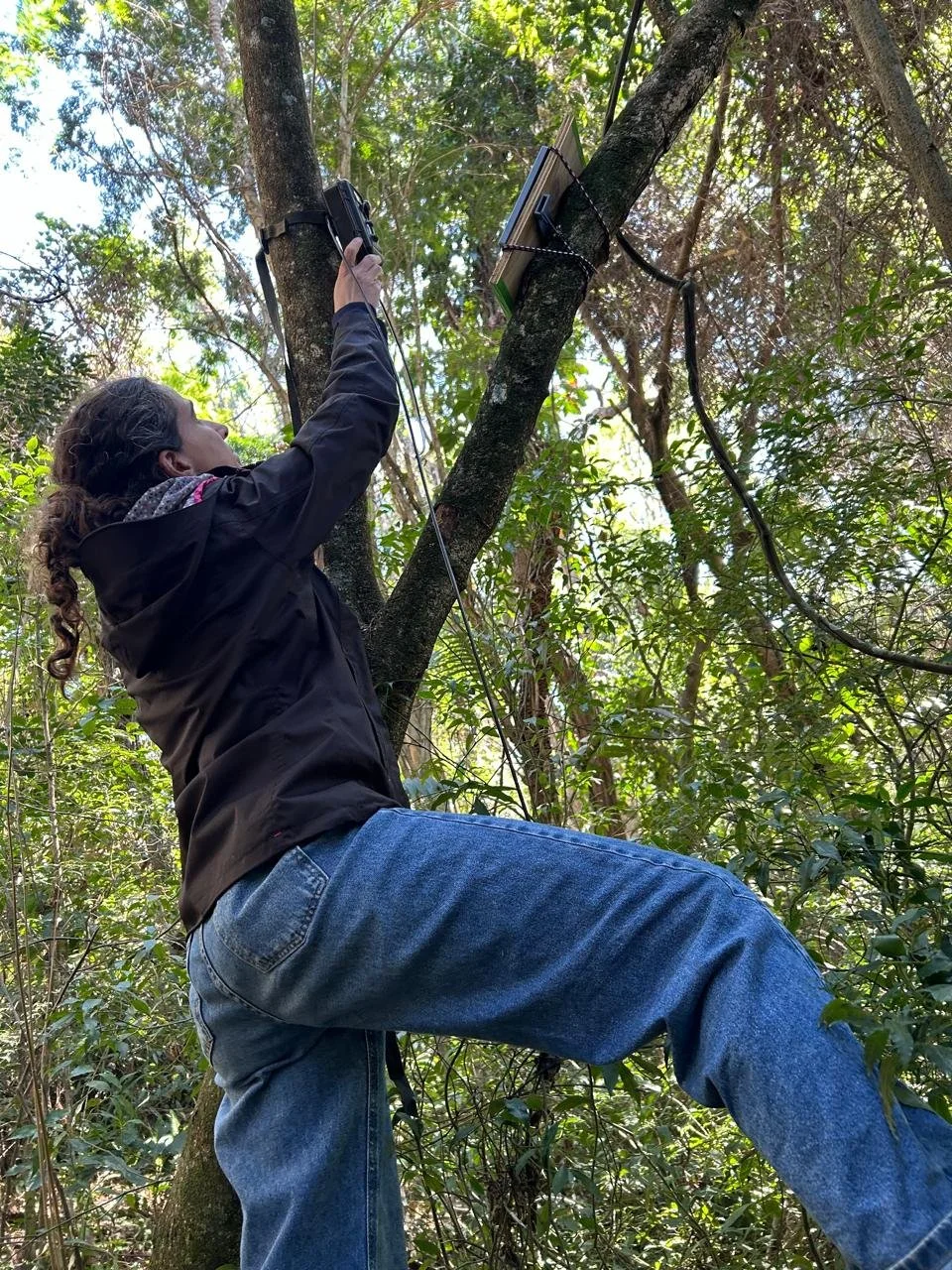
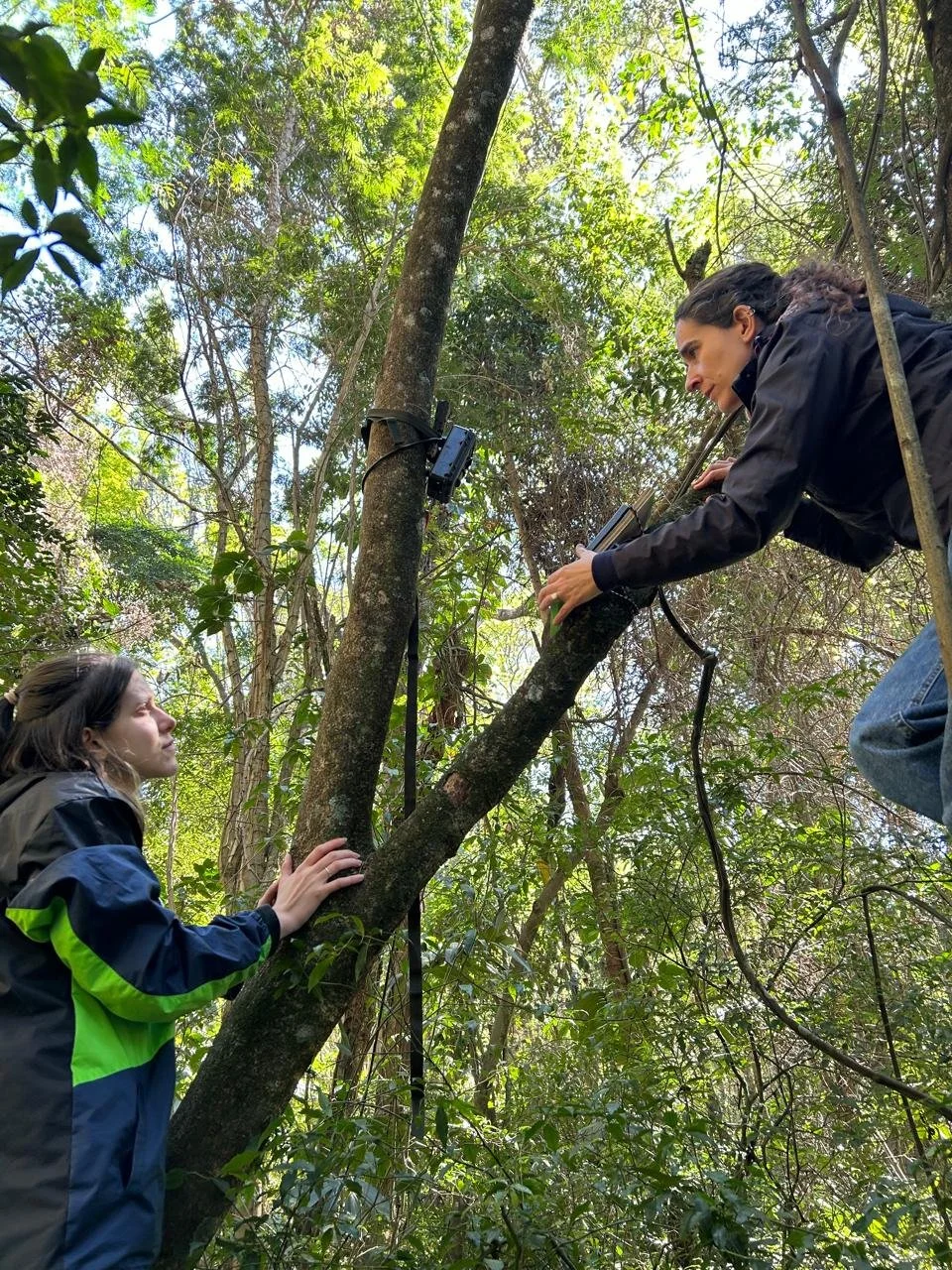
Biological samples are necessary to establish baselines and benchmarks upon which welfare metrics can be developed, but collecting them is generally a stressful and invasive process. Our project aims to elevate the standard by which we collect wildlife samples by introducing a novel method of saliva collection that does not involve immobilizing — or even encountering — the animal being sampled. This project will isolate DNA/RNA from saliva samples of lowland tapirs to detect viruses, as well as health and welfare markers, exploring them within a comparison amongst two regions with varying levels of degradation and human-wildlife conflict and, we assume, associated variations in the welfare and health of wild animals.
Grantee: Maristela Martins de Camargo
Institutions: Instituto de Ciências Biomédicas, Brazil; FUSP, Rwanda
Project start date: March 2024
Grant amount: $45,380
Grant type: Seed grant
Focal species: None specified
Conservation status: Least concern
Disciplines: Physiology, animal welfare science, wildlife management, genetics/genomics
Research locations: Brazil and Rwanda
Project summary
Biological samples are necessary to establish baselines and benchmarks upon which welfare metrics can be developed, but collecting them is generally a stressful and invasive process. Our project aims to elevate the standard by which we collect wildlife samples by introducing a novel method of saliva collection that does not involve immobilizing — or even encountering — the animal being sampled. This project will isolate DNA/RNA from saliva samples of lowland tapirs to detect viruses, as well as health and welfare markers, exploring them within a comparison amongst two regions with varying levels of degradation and human-wildlife conflict and, we assume, associated variations in the welfare and health of wild animals.
Photos
Comparing the welfare of stocked triploid vs native diploid rainbow trout in California
Grantee: Andrew Sharo
Institution: University of California, Los Angeles
Project summary
Rainbow trout are commonly stocked for recreational fishing throughout the world, but because of their negative impacts on the environment, many state agencies now stock triploid rainbow trout, which are sterile. However, triploid rainbow trout are known to be more sensitive to water temperature and dissolved oxygen, which may impact their welfare in wild environments. This project will use a combination of physiological and behavioral indicators to compare the welfare of diploid and triploid rainbow trout. We will assess the welfare of rainbow trout in ponds across the Los Angeles metropolitan region using qualitative behavioral assessment, neutrophil:lymphocyte ratio, body condition, injury/disease presence, and the expression of stressor-related genes, either non-invasively or through sampling fish caught by recreational anglers.
Grantee: Andrew Sharo
Institution: University of California, Los Angeles, US
Project start date: February 2024
Grant amount: $30,000
Grant type: Seed grant
Focal species: Rainbow/steelhead trout (Oncorhynchus mykiss)
Conservation status: Least concern
Disciplines: Ichthyology, genetics/genomics, physiology, animal behavior
Research locations: United States
Project summary
Rainbow trout are commonly stocked for recreational fishing throughout the world, but because of their negative impacts on the environment, many state agencies now stock triploid rainbow trout, which are sterile. However, triploid rainbow trout are known to be more sensitive to water temperature and dissolved oxygen, which may impact their welfare in wild environments. This project will use a combination of physiological and behavioral indicators to compare the welfare of diploid and triploid rainbow trout. We will assess the welfare of rainbow trout in ponds across the Los Angeles metropolitan region using qualitative behavioral assessment, neutrophil:lymphocyte ratio, body condition, injury/disease presence, and the expression of stressor-related genes, either non-invasively or through sampling fish caught by recreational anglers.
The impact of winter food provisioning on the welfare of wild urban hedgehogs
Grantee: Julia Nowack
Institution: Liverpool John Moores University
Project summary
This project will investigate the welfare impacts of supplemental feeding during winter on European hedgehogs. Hedgehogs and other species have adapted to the lack of natural food during the winter by hibernating. Previous research, however, has suggested that hibernation may be interrupted when anthropogenic food sources are available. This project will use biologgers to collect data on winter activity and hibernation, as well as the animals’ use of specially designed feeding stations equipped with miniature thermal imaging devices, which will be used to non-invasively measure eye temperature as an indicator of physiological stress. Welfare assessment will also be supplemented by data on ectoparasite load, body mass, fecal glucocorticoid concentrations, latency to approach a feeding station, and survival rate for adults and juveniles.
Grantee: Julia Nowack
Institution: Liverpool John Moores University, UK
Project start date: September 2024
Grant amount: $29,977
Grant type: Seed grant
Focal species: Western European hedgehog (Erinaceus europaeus)
Conservation status: Least concern
Disciplines: Physiology, population ecology, animal behavior
Research locations: United Kingdom
Project summary
This project will investigate the welfare impacts of supplemental feeding during winter on European hedgehogs. Hedgehogs and other species have adapted to the lack of natural food during the winter by hibernating. Previous research, however, has suggested that hibernation may be interrupted when anthropogenic food sources are available. This project will use biologgers to collect data on winter activity and hibernation, as well as the animals’ use of specially designed feeding stations equipped with miniature thermal imaging devices, which will be used to non-invasively measure eye temperature as an indicator of physiological stress. Welfare assessment will also be supplemented by data on ectoparasite load, body mass, fecal glucocorticoid concentrations, latency to approach a feeding station, and survival rate for adults and juveniles.
Why we funded this project
Food provisioning is a potentially important near-term intervention that is already practiced in some contexts, but usually without data on or a primary interest in its wild animal welfare impacts. We appreciate that this project will use a non-invasive approach with multiple physiological and behavioral indicators to evaluate welfare impacts of supplemental feeding on wild European hedgehogs, including juveniles. The results could have implications for the management of other hibernators with access to supplementary feeding, such as dormice, bears, or chipmunks.
Field tests of bee welfare
Grantee: Vivek Nityanada
Institution: Newcastle University
Project summary
The goal of this project is to develop a cognitive judgment bias test for wild bees and pilot its use in the field. The project will investigate how bee cognitive biases and reward responses vary with factors expected to cause high or low welfare, such as light and vehicular pollution. The researchers will also develop a “lick-o-meter” for assessing welfare based on individual variation in the bees’ consumption of a sugar-water reward, with the expectation that bees in low-welfare environments will display less enthusiasm for consuming the sugar-water.
Grantee: Vivek Nityananda
Institutions: Newcastle University, United Kingdom
Project start date: September 2024
Grant amount: $194,317
Grant type: Challenge grant
Focal species: Buff tailed bumblebees (Bombus terrestris)
Conservation status: Least concern
Disciplines: Animal welfare science, entomology, animal behavior
Research location: United Kingdom
Project summary
Studying affective states in animals has been a key component towards assessing their welfare. Most studies that have used this approach have focused on vertebrates. Yet, the rapid decline in insect numbers calls out for novel methods to monitor their welfare and measuring their affective states would be an important approach. A few recent papers have indicated the presence of affective states in insects, especially bees. These papers have used judgement bias tests in laboratory settings. Recent findings using an active choice test in our lab have also shown robust evidence of affective states in bees due to changed expectations of rewards. However, there is no research looking at these states in the wild. To address this gap, this project seeks to develop and validate new tests for bee affective states in the wild and use these to assess the welfare of bees in the field.
This project will assess whether environments predicted to induce poor welfare and negative valence for bees– such as ones with poor nutrition or light pollution- induce changes in predicted markers of poor welfare. We will use performances in judgement bias tests and reduced responses to rewards in the wild as behavioral markers of welfare. We will also measure the role of neuromodulators (dopamine, serotonin) by measuring the differences in their expression, and of genes involved in their synthesis pathways, in the brains of wild bees in different environments. Measuring changes in these three different markers across different low-welfare environments will help validate them as measure of bee welfare and develop novel markers for wild bee welfare. They will thus providing vital tools for further biological and environmental research in a variety of pollinators.
Why we funded this project
We are generally excited to support this project because it focuses on a wild insect. Insects are extremely abundant and their welfare is typically neglected. Validating a cognitive judgment bias test that can be implemented in the field for a wild insect would be a powerful step forward.
Parasites in the city: How is the impact of parasites on wild animal welfare affected by urbanization?
Grantee: Amanda Trask
Institutions: Institute of Zoology (IOZ), Zoological Society of London (ZSL)
Project summary
This project will evaluate the extent to which parasitism and urbanization impact wild animal welfare, both independently and synergistically, using physiological data on the internal and external parasite loads of deceased gray squirrels, as well as their body condition, immune function, and stress response. The researchers will also collect behavioral welfare indicators from other squirrels using camera traps. This data will be collected along a gradient of urbanization levels and analyzed in the context of the squirrels’ sex and age, to compare population-level welfare across sites varying in degree of urbanization and average parasite metrics and predict how future increases in urbanization might impact wildlife welfare.
Grantee: Amanda Trask
Institutions: Institute of Zoology (IOZ), Zoological Society of London (ZSL), United Kingdom
Project start date: August 2024
Grant amount: $199,941
Grant type: Challenge grant
Focal species: Eastern grey squirrel (Sciurus carolinensis)
Conservation status: Least concern
Disciplines: Infectious disease, population ecology
Research location: United Kingdom
Project summary
Parasitism is likely a key determiner of wild animal welfare, while rapidly increasing urbanisation presents novel challenges and welfare threats, yet the extent that parasitism and urbanisation impact wild animal welfare, both independently and synergistically, remains a major knowledge gap. An individual’s parasite infection status, and the associated welfare impacts, is dependent on parasite exposure risk and susceptibility. Urbanisation may alter exposure risk, for example through changes to population density and resource distribution, and susceptibility, for example through altered host immune function from exposure to urban stressors. Urbanisation may also compound impacts of parasitism, if chronically stressed individuals are less able to cope with further welfare challenges, resulting in synergistic negative welfare effects. Furthermore, welfare impacts of parasites and urbanisation may vary across sex- and life-stage classes, for example due to hormonal influences and changes in immune function with chronic exposure to urban pollution.
We will address this knowledge gap, using grey squirrels from UK sites across an urbanisation gradient. We will use detailed individual-level data on parasite loads and physical and physiological welfare indicators, collected from dead squirrels killed as part of non-native species management, to determine welfare impacts across sites varying in degree of urbanisation, and across sexes and life stages. Then, we will use behavioural indicators from camera trap data to determine associations between population-level welfare, parasite prevalence and degree of urbanisation. Finally, we will estimate ‘welfare expectancy’ of individuals from different populations using sex- and life-stage specific welfare scores. We will expand on current theory and develop a modelling tool to incorporate demographic and environmental stochasticity in welfare states into population models, to aid prediction of how increasing urbanisation may impact wildlife welfare in the future. This study will provide vital knowledge to aid understanding and prediction of the experience and future responses of wild animals to parasites in the context of increasing urbanization, facilitating design and integration of welfare-friendly urban environments for wildlife.
Why we funded this project
Gray squirrels are abundant, they live in close proximity to humans, and they could benefit from welfare interventions such as wildlife fertility control in the near future. Gray squirrels are not native in the UK, where this study will be conducted, and the welfare of non-native species is generally understudied or undervalued compared with native species of conservation interest. This project provides a special opportunity to take advantage of data from squirrels who are being killed as part of a government program, and to access valuable metrics that are hard to measure non-invasively, thereby creating from their deaths an opportunity to gain valuable insights that could ultimately help other squirrels. In addition to their good range of welfare indicators, we appreciate that this project will consider sex- and age-specific variation in welfare impacts and attempt to estimate “welfare expectancy” at a population level.
Are we making urban wildlife sick?
Grantee: Carl Soulsbury
Institution: University of Lincoln
Project summary
The goal of this project is to test whether differences in welfare among individual red foxes and individual European hedgehogs are explained by specific environmental stressors arising from urbanization (e.g., increased human population density, noise pollution, or reduced habitat heterogeneity). Notably, on a population level, foxes appear to have fared well alongside humans, while hedgehogs have struggled to cope with urbanization. The study will confirm whether this contrast is also seen at the level of individual welfare, and offers a unique opportunity to identify common environmental stressors that may be impacting the health and welfare of urban wildlife more generally. To assess welfare, the project will perform cognitive judgment bias and novel object tests and combine them with non-invasive indicators of physiological stress (fecal glucocorticoids and eye/ear temperature) and health (pathogen load).
Grantee: Carl Soulsbury
Institutions: University of Lincoln, United Kingdom
Project start date: October 2024
Grant amount: $148,741.43
Grant type: Challenge grant
Focal species: Red fox (Vulpes vulpes) and European hedgehog (Erinaceus europaeus)
Conservation status: Least concern
Disciplines: Animal welfare science, animal behavior, physiology
Research location: United Kingdom
Project summary
Urbanisation causes profound changes to biodiversity. For many species living in urban areas, there is evidence that urban living leads to greater disease prevalence. It is unclear, however, (a) what factors drive this higher disease prevalence and (b) whether this leads to poorer wild animal welfare. We propose a study to compare two urban-dwelling species, red foxes and Eurasian hedgehogs, where we will characterize pathogen prevalence, load, and diversity across an urban-rural gradient. This study will be carried out at two scales: firstly, we will link pathogen loads, faecal glucocortoicoids and habitat at the landscape level, allowing us to broadly understand if urbanisation is associated with increased pathogen loads. We will then carry out a second, more detailed data collection where we will combine pathogen data with measures of stress (infra-red thermography, faecal glucocorticoids) and behavioural measures of affective valence (novel object and judgement bias tests). Here, we will link together pathogen loads and different measures of welfare at the individual level. Ultimately, our aim is to test, within each species, whether population differences in health and welfare are explained by environmental stressors arising from urbanisation (e.g., increased human population density and reduced habitat heterogeneity).
Why we funded this project
We appreciate that this project considers specific characteristics of urban environments, as opposed to simply comparing urban environments with rural ones. This way, it has more potential to inform near-term interventions. Plus, the project design humanely allows for animals’ voluntary participation. In addition to using an effective suite of welfare indicators to investigate the impact of different parasite loads on welfare, the combination of cognitive bias testing with non-invasive physiological stress metrics will provide information on the validity of those metrics, which are being used concurrently in other projects.
Find Carl’s other project, studying wild insects, here.